· 11 min read
Why is Testing for Mycotoxins in Cannabis Critical (and 7 ways you can reduce it)?
Literally, “mycotoxin” means “fungus poisons”. Mycotoxins are toxic secondary metabolites (a.k.a. by-products) produced during certain fungi and mold replication. These specific fungi or molds often colonize grains and forage, and unfortunately cannabis for reasons that will be discussed below. Mycotoxins contaminants have been around for a while and is not a new topic. The US Food and Drug Administration (FDA) has set a threshold of 0.02 micrograms per gram (20 ppb) for any products that are consumables for both animals and humans. Many studies have shown that mycotoxins can cause many types of illnesses in both animals and humans. Unfortunately, these compounds can be ridiculously stable for a long time and can sometimes even survive intense food processing. This being said, mycotoxins are heavily regulated in the food industry because of the potential toxicity, if and when consumed. So now…this directs us to the question on what and how the Cannabis industry is controlling this toxin?
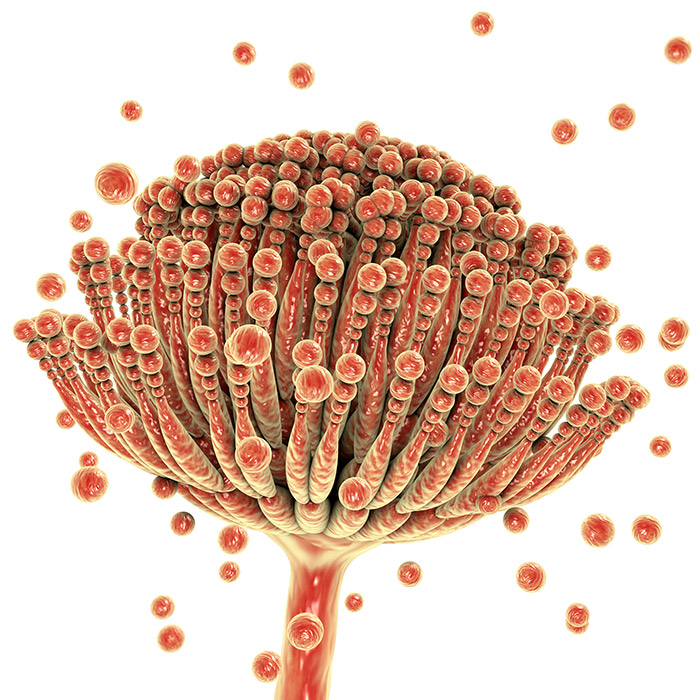
What are Mycotoxins
Literally, “mycotoxin” means “fungus poisons”. Mycotoxins are toxic secondary metabolites (a.k.a. by-products) produced during certain fungi and mold replication. These specific fungi or molds often colonize grains and forage, and unfortunately cannabis for reasons that will be discussed below. Mycotoxins contaminants have been around for a while and is not a new topic. The US Food and Drug Administration (FDA) has set a threshold of 0.02 micrograms per gram (20 ppb) for any products that are consumables for both animals and humans. Many studies have shown that mycotoxins can cause many types of illnesses in both animals and humans. Unfortunately, these compounds can be ridiculously stable for a long time and can sometimes even survive intense food processing. This being said, mycotoxins are heavily regulated in the food industry because of the potential toxicity, if and when consumed. So now…this directs us to the question on what and how the Cannabis industry is controlling this toxin?
Cannabis can be easily prone to mycotoxin contamination due to its cultivation conditions. The ideal thriving environment for molds and fungi are warm and humid. Unfortunately, this is also the ideal conditions for growing cannabis. Even if each plant stage during cannabis growth and the environmental conditions are highly monitored, there are other common sources of mycotoxins that can still contaminate the cannabis product. Common sources of contamination can be during storage, processing and transportation.
One of the biggest concerns with mycotoxins as opposed to Fungi or mold is that it can’t be easily seen. According to World Health Organization (WHO), mycotoxins (or any other by-products created by mold or fungi) can penetrate deep into food rather than being visible on the surface. For this exact reason, more specific laboratory testing is required for detection of mycotoxins before it is put on the store shelf for purchase. This precise laboratory technique will also be discussed below to further emphasize the importance of mycotoxins testing of cannabis products.
How Mycotoxins Develop in Cannabis
Regulating the moisture content and water activity during cannabis cultivation and then during storage is extremely crucial in order to prevent the spread of microbes from molds and fungi that can either produce or create by-products of toxins.
Humidity is one of the major factors for yeast, mold, and microbial contamination. So what is humidity? Humidity is simply the measurement of the moisture present in the air. The reason why yeast, mold, and fungi are so prevalent in cannabis plants and products is due to the growing conditions in which these cannabis plants thrive. Cannabis plants love humidity! Of course, weed is weed and can technically grow in any conditions, but at the end of the day, their ideal thriving conditions are humid conditions, similar to most microbes such as molds and fungi.
Through many years of experience, cannabis cultivators are learning ways to prevent pest and mold infestations during cultivation, aiming to keep the environment at the perfect temperature and moisture – just right for the cannabis plants but not ideal for microbial colonization. Even if the perfect atmospheric humidity conditions are achieved, another source for microbial colonization can be from overwatering. Soggy soil can welcome mold and mildew as well. Unfortunately, the environment is just one of the many reasons for mycotoxins contamination. The cannabis flower can easily become a home for microbes and fungus. Once harvested, if the plant is not properly dried and cured, the risk of introducing contaminants including mycotoxins in the flower is high.
Contamination can also happen during processing and handling via cross-contamination. Let’s say, one batch of perfectly clean flowers is processed using the same machinery in which another contaminated flower was already passed through. The residual mycotoxin from the contaminated flower can be picked up by the “clean” flower. Following the processing,if this flower is not properly dried and cured, it can now become a new home for the mycotoxins to propagate. It is important to note, that cross-contamination can happen at any point in the production. This is why it is extremely important that frequent testing with critical quality assurance measures is set in place. Mycotoxins are not something you would want in your edibles or your joints.
What are the common Mycotoxins contaminants that can be found in Cannabis?
There are five mycotoxin types that are commonly present in cannabis products: aflatoxin B1, B2, G1, G2, and ochratoxin A. All of North America requires the testing of these mycotoxins for any food products, but this same requirement is not mandated in all areas for cannabis products. The research around the area of Ochratoxin A - a type of mycotoxin - is still very limited, and thus the degree of toxicity to the human body is unclear. Although the exact risks are unclear, studies have shown that extensive exposure to Ochratoxin A may be linked to kidney diseases. Let’s explore a little about what Aflatoxins are and why they are classified as a subgroup of Mycotoxins?
What are Aflatoxins?
Aflatoxins are the most carcinogenic and toxic mycotoxin-type produced by the mold species Aspergillus. Aflatoxins are commonly detected in cereal crops such as corn, sorghum, wheat, and rice; oilseeds such as soybean, peanut, sunflower, and cotton; and now cannabis species. Overexposure or high levels of consumption of any four of the aflatoxins: B1, B2, G1, and G2 types have been shown to cause liver damage potentially.
- Aflatoxins: Crops like peanuts or corn are susceptible to aflatoxin contamination and can be seen in the soil as well. Unfortunately, if the soil used for growing the cannabis plants had aflatoxin contaminants, the plant can absorb them and eventually be present in all stages of cultivation, harvest, and processing. The four common found in cannabis products are aflatoxins B1, B2, G1, and G2. All four are labeled as group 1 carcinogens. Out of the four Aflatoxins mentioned above, aflatoxin B1 is the most potent and carcinogenic.
- Ochratoxins: Often found in grains, wine, coffee, and dehydrated fruits. Molds such as the penicillium species often produce this toxin. Ochratoxin A is the most common form found in cannabis. This type is labeled as a group 2b carcinogen that can also cause serious illnesses.
What is the Difference Between Aflatoxin and Mycotoxin?
The main difference between Aflatoxin and mycotoxins is the way it’s produced. Aflatoxin is produced by the Aspergillus species and mycotoxins are just secondary by-products of certain molds and fungi. Aflatoxins only have four types: B1, B2, G1, and G2, whereas Mycotoxins are a much larger group of several subgroups including Aflatoxin, Ochratoxin A, patulin, fumonisins, zearalenone, and nivalenol.
There are over 20 Aflatoxins known and researched by scientists, but the four mentioned above are the most relevant to cannabis testing and are the most toxic type to human health. Interestingly, similar to how the infamous cannabinoids THC and CBD are metabolized in our body, we can also metabolize aflatoxin B1 and B2 – but with a bit more difficult as aflatoxins don’t break down so easily. Unlike the cannabinoids, however, when our body metabolizes aflatoxin B1 and B2, it produces the toxic type aflatoxin M1 and M2 that can cause many health risks including cancer and genetic defects.
Two major challenges with Mycotoxin Testing of Cannabis?
There are two major challenges with cannabis testing labs regarding Mycotoxin testing in the United States currently:
- Regulations and Limit requirements are dependent on the state alone and are not federally mandated
- Lab testing for mycotoxins can be expensive for a lot of startup companies as it requires very expensive instrumentation.
There are two major challenges with cannabis testing labs regarding Mycotoxin testing in the United States currently: 1) Regulations and Limit requirements are dependent on the state alone and are not federally mandated, 2) Lab testing for mycotoxins can be expensive for a lot of startup companies as it requires very expensive instrumentation.
Unfortunately, mycotoxin testing is not mandatory at the federal level in the US and rather is based on the individual state in which medical and recreational cannabis is legal. The US state alone can create its own set of regulations and limitations as to the requirements for cannabis testing. This is one of the biggest challenges in the cannabis industry as there is so much ambiguity on the limit. One US state can impose very strict limits whereas another state might not even have any limitations at all.
How are Mycotoxins being tested: Lab Results
All cannabis labs provide microbial testing including E.coli, salmonella, yeast and mold, and total aerobic count. But the difficulty arises if the cannabis product or flower has been exposed to other contaminants such as mycotoxins. Even if the specific crop or product passes all the microbial testing, mycotoxin contamination can still be present. When there is microbial contamination such as E.coli, it can be simply detected by our noses after one night of incubation in the appropriate medium and temperature. More so, the microbes mentioned above can be tested and identified through a technique called quantitative polymerase chain reaction a.k.a qPCR. However, mycotoxins can not be accurately identified via qPCR.
Mycotoxin can potentially pose serious health illnesses if exposed at high doses, making this one of the top priorities and one of the most expensive services for cannabis testing laboratories to provide. If mycotoxins are undetectable via qPCR testing, how do labs identify them then? The technique all cannabis-testing labs are currently using is Liquid Chromatography with Mass Spectrometry Detection, or in short, LC-MS/MS. At the provincial level in the states, and federal level in Canada, cannabis labs must perform the best method for mycotoxin analysis, which is why all labs have started exercising the use of LC-MS/MS. This technique is one of the MOST sensitive and the most advanced methodology/equipment in the world of biochemistry.
How does LC-MS/MS work?
Liquid chromatography mass spectrometry (LC-MS) is an analytical chemistry laboratory technique used for identification, quantitation, and mass analysis. LC-MS/MS is a widely used technique in pharmaceuticals, food science, and any life science-related research. The simplified description of this technique is as follows: it enables scientists/analysts to detect various compounds individually based on a charge-to-mass ratio in a sample. First, the sample is prepared in an appropriate solvent solution that extracts the particular compound of interest and is after put through a system containing a liquid chromatography column. For cannabis products, acetonitrile or methanol are the preferred solvents for effective extraction. Next, these compounds are then brought into the Mass Spectrometry system where the compounds are ionized (a.k.a become charged). Based on the unique charging and the mass for each particle, each particle can be individually identified and detected via the system.
Liquid Chromatography on its own can be used to detect many cannabinoids and allows the identification of isomers. Isomers are compounds with the same chemical formula but different molecular structures such as delta-8-THC and delta-9-THC. These two cannabinoids are isomers of one another. But when it comes to identifying and detecting many different compounds (100s and 1000s of compounds), mass spectrometry allows scientists and analysts to do wonders. The LC alone is effective, but combined with Mass Spectrometry – the results are much more precise, nothing goes unnoticed, and can help analysts potentially find many unknowns that have yet to be identified.
Many states, including New Jersey, have made Mycotoxin testing a requirement by law. All Cannabis products must pass the mycotoxin level limit established before they can be sold to customers. For cannabis producers, all licensed cannabis testing labs have the appropriate equipment and expertise to provide reliable information on the quality of the product and can make sure that there are no contaminants present in the product.
How to prevent Mycotoxins in your cannabis
Unfortunately, Aflatoxin (a type of mycotoxin) can occur at any plant stage – from seed to the time of harvest – during processing and finally, storage. Although difficult to eliminate the threat of mycotoxin contamination, it can still be reduced. One form of vigorous control of mycotoxins can be the use of chemical treatment. However, chemical treatments are not feasible and allowed for the cannabis industry. So now what?
The ideal plant stage to monitor to effectively alleviate mycotoxin contamination is during harvest and storage. There are studies that have suggested a strong correlation between increased water activity and mycotoxin production. Thankfully, in the cannabis industry, most testing labs are equipped to test water activity and/or moisture content. It is important to note that water activity is not the same as moisture content:
Moisture content (%) is the amount of water present in the given food or product.
Water activity (no unit), is a ratio of the vapor pressure in food to the vapor pressure of pure water. In other words, water activity measurement is NOT the amount of water present in a food, but rather it’s the excess amount of water that is available for microbes to use. As the water activity measurement increases, the likelihood of microorganisms – which includes mycotoxin production – increases proportionally.
Although protocols and guidelines regarding the prevention of mycotoxin contaminants are still unclear in the cannabis industry, there are some basic practices that cannabis cultivators have adopted from other crop cultivation that have shown to be quite effective in reducing mycotoxin contamination.
Effective Harvesting Methods to Reduce Mycotoxin Contamination:
- Harvest at the right time. Harvesting either too early or beyond its prime time is one of the common ways in which cannabis plants are contaminated with microbes. There are some visual cues to look out for that will indicate the cannabis plant is ready for harvest. Some visual cues to keep in mind:
- Trichome Color: Half of the trichomes should have a milky white color and the other half should have a vibrant amber colour. Clear trichomes indicate cannabis is not ready for harvest and requires more time.
- Leaf Color: When the plant is ready for harvest, the fan leaves will turn yellow in colour and will eventually start to fall due to a decrease in nitrogen levels.
- Curling Leaves: As the fan leaves turn yellow, the leaves also begin to curl and dry up.
- Brown Pistil: The prime time to harvest cannabis is also when half of the pistils turn brown.
- Bud Shape: Firm and tight buds are also a good indicator the plant is ready for harvest.
- Bud Shape: Firm and tight buds are also a good indicator the plant is ready for harvest.
Effective Storage Methods to Reduce Mycotoxin Contamination:
- Reduce lag time between harvest time and when the plant is dried for storage
- Keep storage facility and containers constantly clean
- The cut-off for moisture content should be 14 % (or less than 0.7 water activity)
- Pest control should be maintained even after harvest
- Monitoring and maintaining an ideal and stable environment – this would include decreasing oxygen levels and replacing it with nitrogen or carbon dioxide. This would help with reducing the risk of aflatoxin and ochratoxin contamination.
FAQ
Frequently asked
- Why can't qPCR be used to test for mycotoxins?
- All cannabis labs provide microbial testing for organisms such as E. coli, salmonella, yeast and mold, and total aerobic count, and those microbes can be tested and identified using quantitative polymerase chain reaction, or qPCR. However, mycotoxins cannot be accurately identified via qPCR, and a product can pass all its microbial testing while mycotoxin contamination is still present. Labs therefore use liquid chromatography with tandem mass spectrometry detection for mycotoxin analysis instead.
- Which mycotoxins are tested for in cannabis?
- Five mycotoxin types are commonly present in cannabis products: aflatoxins B1, B2, G1 and G2, plus ochratoxin A. All four aflatoxins are labelled group 1 carcinogens, with aflatoxin B1 the most potent and carcinogenic, and they are produced by the mold species Aspergillus. Ochratoxin A is labelled a group 2b carcinogen and is often produced by Penicillium species.
- What is the difference between moisture content and water activity?
- Moisture content, expressed as a percentage, is the amount of water present in a given food or product. Water activity, which has no unit, is a ratio of the vapour pressure in the food to the vapour pressure of pure water — it measures not how much water is present but the excess water available for microbes to use. As the water activity measurement increases, the likelihood of microorganisms, including mycotoxin production, increases proportionally.
- What moisture level should cannabis be stored at to limit mold and mycotoxins?
- The recommended cut-off for moisture content in storage is 14%, or less than 0.7 water activity. Other storage practices that reduce mycotoxin contamination include reducing the lag time between harvest and drying for storage, keeping the storage facility and containers constantly clean, maintaining pest control after harvest, and decreasing oxygen levels by replacing them with nitrogen or carbon dioxide.
- Why can't you just look at cannabis to see if it has mycotoxins?
- One of the biggest concerns with mycotoxins, as opposed to the fungi or mold themselves, is that they cannot easily be seen. According to the World Health Organization, mycotoxins and other by-products created by mold or fungi can penetrate deep into food rather than being visible on the surface, which is why specific laboratory testing is required to detect them before a product reaches the shelf.
Need this tested?
Compare labs that run these assays and get quotes in one go — no account, no fee.