· 12 min read
Cannabis Lab 101: Cannabis Lab Record Retention (What to Keep, How Long, and What Auditors Actually Inspect)
I break down which laboratory records a cannabis testing lab must retain, for how long, and in what format to survive a state regulatory audit or an ISO/IEC 17025 surveillance assessment, covering raw data, chromatograms, COAs, chain-of-custody forms, training files, and corrective action records.
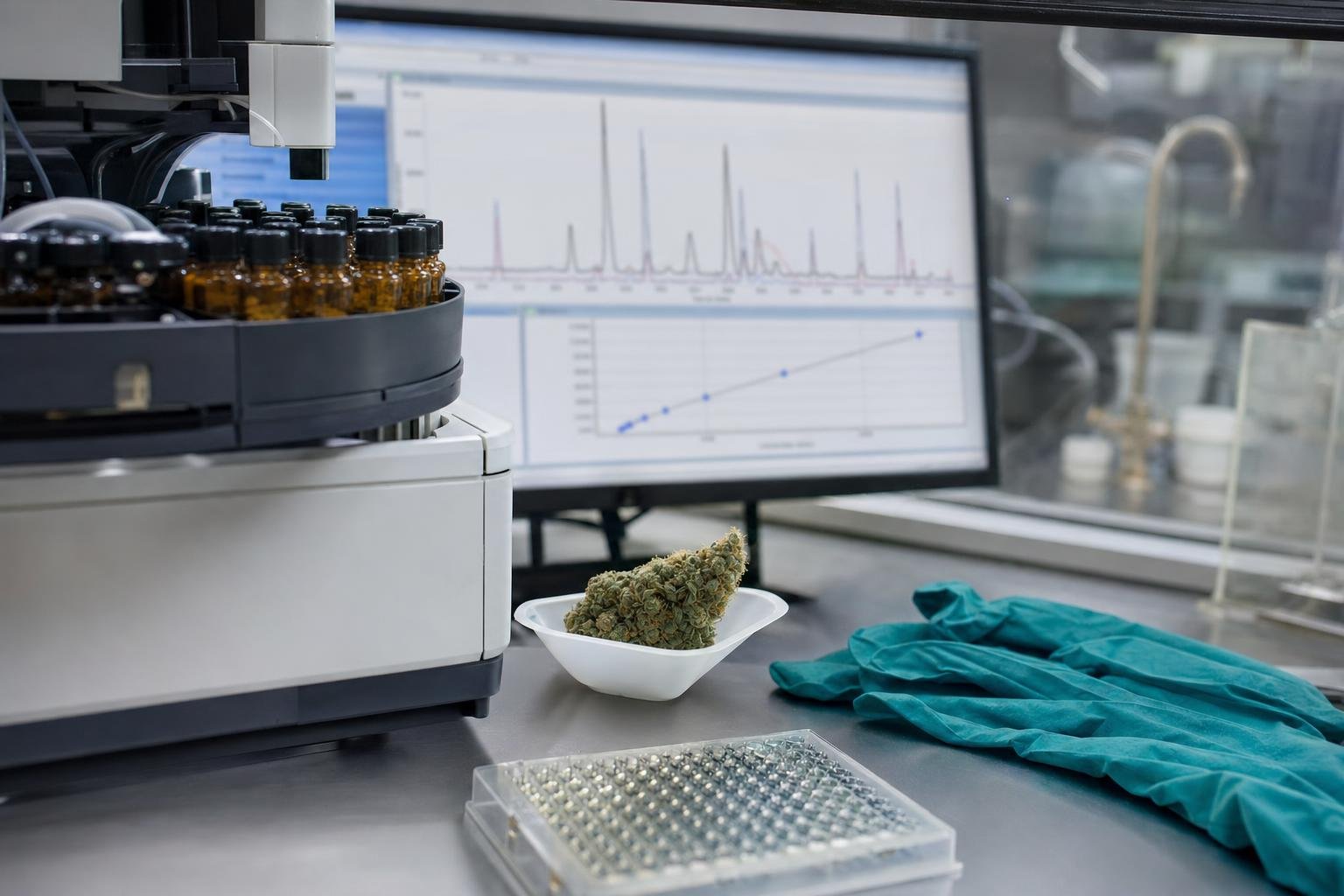
Which laboratory records a cannabis testing lab must retain, for how long, and in what format to survive a state regulatory audit or an ISO/IEC 17025 surveillance assessment is one of those questions that every lab director eventually faces under pressure, usually the week before an inspection. This article maps the record categories, the retention windows that state regulations actually specify, and the practical difference between records you must produce on the spot and records you may keep in deep archive.
Whether you are a lab director building your quality system from scratch, a quality manager preparing a document-control SOP, or a compliance officer who just got a notice of inspection, this article gives you the categories, the timelines, and the regulatory citations you need to audit your own files before the regulator does.
This article covers:
- The eight categories of records that regulators and accreditation bodies inspect
- Retention windows from five states with sourced primary regulations
- The raw-data and chromatogram rules that trip up labs most often
- Chain-of-custody documentation requirements
- COA content and retention obligations
- Training, SOP version control, and corrective-action files
- Immediate-access versus archival records
- A records-retention checklist you can use today
Step 1: Understand the Eight Record Categories Auditors Inspect
Before you can build a retention schedule, you need a working map of what counts as a laboratory record. Regulators and accreditation bodies do not treat all documents the same way, and conflating a final COA with the raw instrument file that supports it is the single most common gap I see in lab document-control systems.
The categories that appear repeatedly across state cannabis laboratory regulations are:
- Raw instrument data, including original instrument output files, sequence tables, and integration events
- Chromatograms, both automated and manually integrated versions
- Calibration and QC records, including standard preparation logs, calibration curve data, and QC sample results
- Chain-of-custody forms, covering sample receipt, transfer, storage, and destruction
- Issued COAs, the final reports delivered to clients and regulators
- Training files, including competency assessments, certifications, and records of analyst authorization
- Standard operating procedures, including current, previous, and archived versions
- Deviation logs and corrective-action records, documenting out-of-specification events and their resolution
The record that saves you in an audit is almost never the COA itself. It is the chain of evidence connecting the COA back to the original instrument output.
If your document-control system stores the PDF report but not the native data file, you have a gap that an auditor will find. For a broader look at how method validation feeds into the records you generate, see the Cannabis Lab 101 method validation article.
Step 2: Know Your State’s Retention Window Before You Build a Schedule
There is no single national retention period for cannabis laboratory records. The fact sheet for this article located sourced requirements ranging from two years to five years, depending on jurisdiction and record category. Here is what the primary sources actually say.
Washington WAC 16-309-030 requires a cannabis laboratory to keep and maintain all raw data and testing information for five years. The rule also authorizes the department, board, or accrediting authority to require a laboratory to submit that raw data on demand. The Washington rulemaking text makes clear that the five-year obligation covers all raw data and testing information, not merely the final certificate.
New Mexico Administrative Code 16.8.2 sets a two-year retention period for raw data, documentation, protocols, and COAs, measured from completion of the analysis. New Mexico also requires a laboratory to retain a sample until further directed by the division when the division notifies the lab that the sample is needed for an investigation by the division, a law enforcement agency, or another department.
New York Part 130 requires specified current, previous, and archived laboratory records to be retained electronically or in hardcopy for at least five years. Method-approval documentation must remain available for at least five years after the method is discontinued. The New York OCM laboratory permit application reinforces the five-year floor and requires labs that close or transfer ownership to maintain a plan ensuring records remain available.
Alaska’s cannabis testing regulations require five-year retention for hardcopy sample, testing, and custody evidence and for digital data acquisition files.
Utah’s government records schedule assigns a five-year retention period to laboratory records including COAs, which it describes as chemical and microbiological testing results uploaded to an inventory-control system or emailed to the client.
Texas DSHS rules for consumable-hemp products require certain records, including COAs, to be maintained for at least three years after creation.
Note: These are the periods from the states covered by this fact sheet. Your jurisdiction may differ. Always verify against your state regulator’s current published rule. New Mexico’s two-year minimum is the shortest period located in primary sources; five years is the most common floor across the states surveyed here.
Build your retention schedule around the longest period that applies to your accreditation scope, then verify whether your state is shorter or longer.
Step 3: Get the Raw Data and Chromatogram Rules Right
This is where labs get into trouble. Regulators increasingly understand that a chromatogram can be manipulated after the fact, and the rules in several states reflect that awareness directly.
Alaska’s regulations define raw data to include original observations and calculations recorded when made, and they expressly include chromatograms in that definition. More specifically, Alaska requires that when manual integration is performed, chromatograms representing both the before and after states must be available. Any manually integrated chromatogram must be initialed and dated by the person making the change.
That last requirement is worth pausing on. If your analysts are reintegrating peaks and saving over the original file, you are not compliant with Alaska’s rules, and you are creating exactly the kind of audit trail gap that looks like data integrity fraud even when it is just sloppiness.
Washington and Mississippi both address the distinction between raw unprocessed instrument-output files and processed quantitation-output files. Mississippi requires both to be stored on electronic, magnetic, or optical media, with electronic data password-protected.
Save the original instrument file before any reprocessing, store both versions, and document who changed what and when.
For context on the instrument platforms generating these files, see the potency testing technical overview and the HPLC cannabinoid separation methods article.
Note: A universal requirement to retain instrument-native files, audit trails, metadata, and software-method files is not established across all jurisdictions by the sources available for this article. Alaska and Mississippi address this most explicitly. Check your state’s rule text for the specific language.
Step 4: Document Chain of Custody at Every Transfer Point
Alaska’s regulations define chain of custody (the documented trail recording the sequence of custody, the person or storage location in control at each point, every transfer, and the final disposition of a sample or evidence) as a formal record category subject to the same five-year retention requirement as raw data.
New York Part 130 requires a cannabis laboratory to maintain a chain-of-custody procedure covering sampling, transport, receipt, handling, storage, and destruction of samples. The chain-of-custody form must record the date, time, names, and signatures of persons involved whenever a sample changes custody, is transported, or is destroyed. New York also requires a laboratory sampling firm to retain employee-training records and sampling- and transport-related SOPs for at least five years.
Every hand that touches a sample must sign the chain-of-custody form at the moment of transfer, not reconstructed from memory at the end of the shift.
A chain-of-custody gap is one of the fastest ways to invalidate a result in a regulatory dispute or a legal proceeding. The form is not administrative overhead. It is the legal record that the sample tested is the sample the client submitted. For a broader look at what compliance testing involves from intake to report, see the introduction to cannabis compliance testing.
Step 5: Build a COA Retention and Content Checklist
The COA (certificate of analysis, the final report issued to a client summarizing all test results for a sample) is the document most regulators ask for first, but it is also the document that means nothing without the underlying records that support it.
Utah’s records schedule describes COAs as records uploaded to an inventory-control system or emailed to the client and assigns them a five-year retention period for backup and laboratory-accreditation maintenance purposes.
Texas DSHS rules specify what a COA must contain: identification of the laboratory, client, sampler, sample matrix, lot, receipt date, analysis dates, results, units, methods, instrumentation, LOD (limit of detection, the lowest concentration the method can reliably detect), and LOQ (limit of quantitation, the lowest concentration the method can reliably measure with acceptable precision). Texas also requires measurement-of-uncertainty analysis parameters and results for all requested analyses.
New York requires a laboratory to prepare a COA and to submit a COA template with its laboratory permit application, meaning the format is reviewed before the lab ever issues a report.
A COA that cannot be traced back to a retained raw data file is not a COA. It is an assertion.
For the ISO/IEC 17025 accreditation requirements that govern how a COA must be structured and what it must contain, see the ISO 17025 audit preparation guide.
Step 6: Manage SOP Versions, Training Files, and Corrective-Action Records
These three categories are the ones labs most often underinvest in, and they are the ones that reveal systemic problems to an auditor faster than any instrument record.
New York Part 130 requires a laboratory to retain current, previous, and archived versions of specified records, supporting version traceability rather than retaining only the currently effective document. This means that if you revised your potency SOP eighteen months ago, the previous version must still be retrievable. An auditor reviewing a result from two years ago needs to know which version of the SOP was in effect at the time.
New York also requires a laboratory sampling firm to retain employee-training records and sampling- and transport-related SOPs for at least five years.
Alaska’s regulations require laboratory procedures to address control, maintenance, and retention of records and documents, and to address error correction, digital or hardcopy form completion, traceability, and retention times. That last point means your document-control SOP must itself specify how long each record category is kept.
Every corrective-action record must include the date the deviation was identified, the root cause, the corrective action taken, and evidence of verification that the action worked.
I suggest labs take it a step further and link each corrective-action record to the specific batch or sample it affected, so an auditor can pull the thread from the deviation log back to the raw data in a single lookup rather than a scavenger hunt.
Step 7: Know the Difference Between Immediate-Access and Archival Records
Not all records need to live in the same place, but all records need to be retrievable. The practical distinction is between records an auditor expects to see within minutes and records that may reasonably take longer to locate.
Mississippi’s rules require all testing data to be made available to the Department on request and require a marijuana testing facility to allow access to testing records for inspection and audit. The rule also states that secure archival storage does not eliminate the obligation to retrieve records, meaning password-protected or off-site storage is not a valid reason for slow production.
Washington WAC 16-309-030 authorizes the department, board, or accrediting authority to require a laboratory to submit raw data and information related to testing, with no grace period specified in the rule text.
In practice, I would organize records into two tiers. Tier one covers the current year and the prior year: these live in your LIMS (laboratory information management system) or on a local server with immediate retrieval. Tier two covers everything older: these may be archived to a secondary system or physical storage, but you must be able to retrieve a specific batch record within a defined and documented timeframe.
Document your retrieval procedure in your quality manual so that when an auditor asks for a record from three years ago, you have a written process rather than a panicked search.
Note: New Mexico’s rule requires a laboratory to retain a sample itself, not just the records, when notified by the division that the sample is needed for an investigation, and to continue holding it until further directed by the division. Physical sample retention is a separate obligation from document retention and requires its own storage protocol.
Records-Retention Quick Reference
Use this as a starting checklist. Verify each line against your state’s current published rule.
- Raw instrument data and chromatograms (both pre- and post-integration where manual integration occurs): five years in WA, NY, AK, UT; two years in NM; verify your state
- Chain-of-custody forms: five years in AK, NY; verify your state
- Issued COAs: five years in WA, NY, UT; two years in NM; three years for consumable-hemp in TX; verify your state
- Training records and sampling SOPs: five years in NY; verify your state
- SOP version history (current, previous, and archived): five years in NY; verify your state
- Deviation logs and corrective-action records: verify your state; retain at minimum as long as the associated batch records
- Method-approval documentation: five years after method discontinuation in NY; verify your state
Quick answers
How long does a cannabis lab have to keep records? Retention windows vary by state and range from two years (New Mexico) to five years (Washington, New York, Alaska, Utah) depending on jurisdiction and record category. Texas requires at least three years for certain consumable-hemp records. Check your state regulator’s current rule because there is no single national minimum.
Do cannabis labs have to keep the raw chromatogram files, not just the COA? Yes, in the states that have addressed this explicitly. Alaska’s cannabis testing regulations define raw data to include original chromatograms and require that both the pre- and post-integration versions be retained whenever manual integration is performed. Washington’s WAC 16-309-030 requires retention of all raw data and testing information, not merely the final certificate.
Can a cannabis lab store records electronically instead of in paper binders? Most state rules allow or require electronic storage, but the format requirements differ. Mississippi expressly requires raw and processed instrument-output files to be stored on electronic, magnetic, or optical media and mandates password protection. New York accepts electronic or hardcopy. Confirm your state’s specific format and security requirements before going paperless.
What happens to records if a cannabis lab closes or is sold? New York requires a laboratory that closes or transfers ownership to maintain a plan ensuring that records remain available for at least five years. The obligation to produce records does not end when the business changes hands, so the succession plan must be documented before the transfer is complete.
What records do auditors actually ask to see first during a cannabis lab inspection? Auditors typically request chain-of-custody forms, issued COAs, and the underlying raw data for a selected batch to verify that the reported result traces back to the original instrument output. Alaska and Mississippi regulations both require records to be accessible for inspection on request, meaning archived storage is not an excuse for slow retrieval.
Does a COA have to include measurement uncertainty? Texas rules for consumable-hemp COAs expressly require measurement-of-uncertainty analysis parameters and results for all requested analyses. ISO/IEC 17025 accreditation also requires laboratories to report measurement uncertainty where relevant. Check your state’s COA content requirements because some jurisdictions specify mandatory fields including the laboratory, client, sampler, sample matrix, lot, receipt date, analysis dates, results, units, methods, instrumentation, LOD, and LOQ.
Sources
- Utah Government Records Schedule, Laboratory Records
- Washington WSR 24-05-079 Rulemaking Text
- New Mexico Administrative Code 16.8.2 Amendment
- Mississippi Medical Marijuana Program Subpart 1 Proposed Rule
- Washington WAC 16-309-030
- New York OCM Laboratory Permit Application
- Alaska Cannabis Testing Regulations
- Texas DSHS Consumable Hemp Products Rule
- New York Part 130, Cannabis Laboratories
FAQ
Frequently asked
- How long does a cannabis lab have to keep records?
- Retention windows vary by state and range from two years (New Mexico) to five years (Washington, New York, Alaska, Utah) depending on jurisdiction and record category. Texas requires at least three years for certain consumable-hemp records. Check your state regulator's current rule because there is no single national minimum.
- Do cannabis labs have to keep the raw chromatogram files, not just the COA?
- Yes, in the states that have addressed this explicitly. Alaska's cannabis testing regulations define raw data to include original chromatograms and require that both the pre- and post-integration versions be retained whenever manual integration is performed. Washington's WAC 16-309-030 requires retention of all raw data and testing information, not merely the final certificate.
- Can a cannabis lab store records electronically instead of in paper binders?
- Most state rules allow or require electronic storage, but the format requirements differ. Mississippi expressly requires raw and processed instrument-output files to be stored on electronic, magnetic, or optical media and mandates password protection. New York accepts electronic or hardcopy. Confirm your state's specific format and security requirements before going paperless.
- What happens to records if a cannabis lab closes or is sold?
- New York requires a laboratory that closes or transfers ownership to maintain a plan ensuring that records remain available for at least five years. The obligation to produce records does not end when the business changes hands, so the succession plan must be documented before the transfer is complete.
- What records do auditors actually ask to see first during a cannabis lab inspection?
- Auditors typically request chain-of-custody forms, issued COAs, and the underlying raw data for a selected batch to verify that the reported result traces back to the original instrument output. Alaska and Mississippi regulations both require records to be accessible for inspection on request, meaning archived storage is not an excuse for slow retrieval.
- Does a COA have to include measurement uncertainty?
- Texas rules for consumable-hemp COAs expressly require measurement-of-uncertainty analysis parameters and results for all requested analyses. ISO/IEC 17025 accreditation also requires laboratories to report measurement uncertainty where relevant. Check your state's COA content requirements because some jurisdictions specify mandatory fields including the laboratory, client, sampler, sample matrix, lot, receipt date, analysis dates, results, units, methods, instrumentation, LOD, and LOQ.
Related guides
All guides- 01
Cannabis Lab 101: Cannabis Edibles Testing Cost — Why Infused Products Cost More to Test
I spent four years running potency assays on everything from flower to fudge, and infused products always took longer and cost more. Here is exactly why — matrix effects, homogeneity requirements, and the extra sample prep no one explains — plus real prices from published lab menus.
- 02
Cannabis Lab 101: Writing SOPs That Survive an Audit
I spent four years watching labs fail accreditation audits over paperwork that should have been airtight. This guide walks through the structure of a defensible SOP, version control that actually works, training records auditors accept, and the recurring findings that accreditation bodies flag most often.
- 03
Cannabis Lab 101: Cannabis Lab Technician Salary by State and Role
I pulled every sourced number I could find from ZipRecruiter, Indeed, and Salary.com to build a real salary table by role — from sample-prep tech to lab manager. Here is what the data actually says, what drives the spread, and how to negotiate your next offer.
Need this tested?
Compare labs that run these assays and get quotes in one go — no account, no fee.