· 11 min read
Cannabis Lab 101: Chain of Custody for Cannabis Samples (Field-by-Field Requirements and Common Rejection Triggers)
I break down every field that must appear on a cannabis chain-of-custody form, explain why each one exists, and list the exact conditions that cause a lab to reject a sample before a single instrument is turned on. Covers California, New York, Nevada, and Maine requirements with primary-source citations.
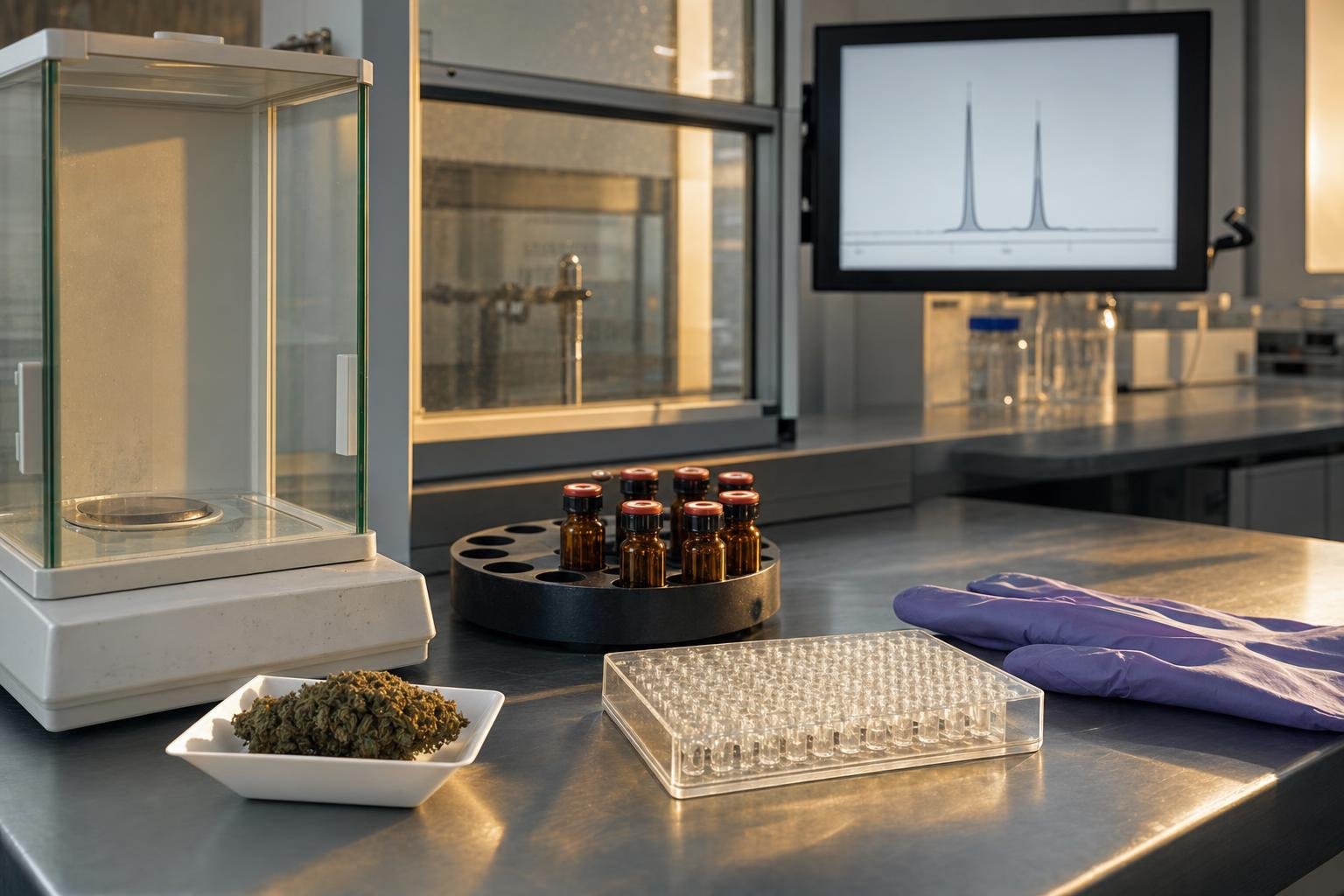
A chain-of-custody form is the legal spine of every cannabis compliance test. It is the document that proves a sample collected at a cultivation or manufacturing facility is the same material the lab analyzed, handled by identified people, under documented conditions, without interruption. Get one field wrong and the lab may reject the sample before a single instrument is turned on, costing you time, money, and potentially a sales window.
Whether you are a cultivator preparing your first mandatory submission, a compliance officer building a submission checklist, or a lab technician writing an intake SOP, this article gives you the field-by-field requirements drawn from California, New York, Nevada, and Maine primary sources, plus the exact rejection triggers that send samples back.
This article covers:
- What a chain of custody is and why it matters legally
- The core fields that appear across multiple state frameworks
- State-specific variations you need to know
- The most common rejection triggers, with regulatory citations
- What happens after a rejection and how to avoid resampling
Step 1: Understand What a Chain of Custody Actually Does
A chain-of-custody (COC) document is a contemporaneous record of who had physical control of a sample, when, and under what conditions, from the moment of collection through laboratory analysis and final disposition. In cannabis compliance testing, it serves two functions simultaneously.
First, it is a legal instrument. Regulators use it to confirm that the sample tested is representative of the batch on hold and that no one tampered with it in transit. If a batch fails and the licensee contests the result, the COC is the first document a regulator or attorney will examine.
Second, it is a laboratory quality record. ISO/IEC 17025 is required for cannabis testing laboratories in many jurisdictions, including California, Nevada, and New York, and sample integrity and chain-of-custody controls are a core part of what accreditation bodies audit. A lab that accepts a compromised sample and reports a result has produced a number that cannot be defended.
All four states examined here require a formal COC procedure. California requires a licensed laboratory to develop and implement a chain-of-custody protocol covering documentation of sample transport, handling, storage, and destruction, and to complete a COC form for each sample collected and analyzed, per the California DCC regulations. New York’s Part 130 laboratory regulations require a COC procedure covering sampling, transport, receipt, handling, storage, and destruction. Nevada’s Regulation 11 and Maine’s Best Practice Guide for Sample Collection impose equivalent requirements.
The COC form is not paperwork for its own sake: it is the evidentiary record that makes a test result legally defensible.
Step 2: Fill In Every Core Field Before the Sample Leaves the Facility
No single nationwide cannabis COC form exists. Requirements are jurisdiction-specific and your lab’s approved SOP may add fields beyond what the state minimum requires. That said, the following fields appear across multiple state frameworks and should be treated as a baseline for any submission.
Unique sample identifier. California’s DCC-LIC-021 Sampling Procedures Form requires the SOP to explain how each representative sample receives a unique sample identifier. This is the alphanumeric label that ties the physical container to every downstream record.
Batch, lot, or production-run number. Nevada’s Regulation 11 requires the batch, lot, or production-run number to appear both on the sample package and on the COC. California goes further: the representative sampling checklist for distributors requires the sampling video to state the batch number verbally or in writing at the beginning of the video. A missing batch number is one of the fastest ways to trigger a rejection.
Product type, product name, and strain name. Nevada lists these as pertinent identifiers required in the COC documentation. Product type is the closest thing most states have to a formal matrix field: flower, concentrate, edible, tincture, and so on. The matrix matters because different matrices require different preparation methods and different minimum sample masses.
Seed-to-sale tracking number. Nevada requires documentation of pertinent sample identifiers, including the seed-to-sale tracking number when appropriate, per Regulation 11. Most state track-and-trace systems (Metrc is the most common platform) generate this number; it must match what is in the system or the batch cannot be released.
Sample weight or quantity. Nevada requires this on both the package and the COC. The lab will verify it at intake. If the submitted mass is insufficient for all required tests, the sample may be rejected or the test menu may need to be renegotiated.
Collection date and time, and transfer date and time. New York’s Part 130 requires the date, time, names, and signatures of involved persons to be recorded whenever custody changes, a sample is transported, or a sample is destroyed. Every handoff is a separate event requiring its own entry.
Names and signatures of all parties. California requires the distributor or distributor employee and the laboratory employee to sign and date the COC after sample selection, per the DCC representative sampling checklist. New York’s OCM Sampling Firm Checklist requires the licensee requesting sampling and the sampling-firm employee to sign and date after sample selection.
Sampling and transportation observations. California’s DCC-LIC-021 requires the SOP to describe how sampling and transportation conditions, including problems, issues, and observations, are recorded on the COC form. This is where you note a delayed courier, a cooler that ran warm, or a container that arrived with a dented lid.
Note: For edibles and other final packaged products, New York requires that samples be placed in final packaging before shipment to the laboratory, and that final-product samples arrive in their sealed product form, such as liquid extract in a sealed bottle or capsules in an intact sealed bottle. A bulk sample pulled from a finished-goods bin and dropped into a generic bag does not meet this requirement.
Step 3: Verify Seal Integrity and Sample Condition at Every Transfer Point
Tamper-evident packaging is not optional. California defines “tamper-evident” as packaging sealed so that opening it causes obvious destruction of the seal, per the DCC regulations. Nevada requires the sample to be placed in a tamper-resistant package or sealed with tamper-resistant tape immediately after collection, and requires documentation of the external package condition and integrity of seals at receipt, per Regulation 11.
At every custody transfer, the person receiving the sample must inspect the seal and record its condition on the COC. This is not a formality. Maine’s Best Practice Guide identifies a broken shipping container and evidence of tampering, manipulation, adulteration, or contamination as conditions that require the sample to be deemed compromised.
Nevada also requires that identifiers on sample containers be indelible, legible, and able to withstand processing and storage conditions. A label printed on regular paper that smears when the cooler condenses is a rejection waiting to happen. Use solvent-resistant, waterproof labels.
If the seal is broken when the sample arrives at the lab, the lab has no choice but to reject it, regardless of how good the paperwork looks.
Note: New York prohibits altering the COC form for a custody change after custody has already transferred. If you discover an error after signing off, contact the lab immediately. The correction process must be documented separately; you cannot simply cross out and initial on the original entry for a completed transfer event.
Step 4: Know the Rejection Triggers So You Can Prevent Them
Maine’s Best Practice Guide provides the most explicit published list of rejection conditions I have seen from any state regulator. Every lab director writing an intake SOP should read it. The conditions that require a sample to be deemed compromised are:
- A broken shipping container
- Evidence of tampering, manipulation, adulteration, or contamination
- Failure to follow applicable cannabis-program rules or the facility’s sample-collection SOP
- A missing or incomplete sample-collection field log (the COC itself)
- A sample temperature outside the required range
- Any other factor that may negatively affect sample integrity after collection
Maine also requires the testing facility to document the rejection reason and notify the licensee, and requires the laboratory and licensee to determine the process for resampling rejected batches.
I suggest labs take it a step further and build a written intake checklist that maps each of these conditions to a specific COC field or physical inspection step. That way, the technician doing intake is not relying on memory at 8 a.m. on a Monday with six coolers on the counter.
The practical consequences of a rejection extend beyond inconvenience. In California, the distributor must retain the entire batch on the licensed premises until the applicable regulatory disposition, including resolution of any failed test or approval of a remediation plan, per the DCC representative sampling checklist. A rejected sample means the clock resets, the batch stays on hold, and the sales window shrinks.
Note: New York requires any change to the sample to be documented on both the COC and the shipping manifest, per the OCM Sampling Firm Checklist. If a sample container is damaged in transit and the lab transfers material to a new container at intake, that action must be recorded in both places before any analysis begins.
Step 5: Understand State-Specific Variations Before You Submit
The four states examined here illustrate the range of variation you will encounter. Do not assume that a COC form that passed review in one state will satisfy another.
California centers its COC requirements around the laboratory’s approved sampling SOP. The DCC-LIC-021 form requires the SOP to address storage and preservation of samples in containers that prevent contamination and tampering, and to describe how the unique sample identifier is assigned. The sampling SOP must be retained on the laboratory premises and accessible to the sampler during sampling.
New York adds a batch-size dimension that affects sampling itself, not just documentation. The OCM Sampling Quality System Standard limits a cannabis product batch to no more than 150,000 packaged units and specifies minimum sample-unit counts according to batch size. If your batch exceeds the limit or your sample count falls below the minimum, the COC is the least of your problems.
Nevada is the most explicit about what must appear on the physical package as well as the COC form. Regulation 11 requires the batch or lot number and sample weight or quantity to appear on both the package and the COC, and requires identifiers to be indelible and legible.
Maine is the most explicit about rejection consequences. Its Best Practice Guide is the clearest published statement I have found of what triggers a rejection and what happens next. If your state has not published an equivalent document, Maine’s list is a reasonable proxy for building your own intake SOP.
For states not covered here, go to your state cannabis regulator’s laboratory or testing page and look for the laboratory regulations, sampling standards, and any published checklists or guidance documents. Primary sources only: a blog post from a testing lab is not a substitute for the regulation.
Note: Hemp products destined for a state-licensed cannabis lab follow the same COC logic, but the applicable regulations may differ depending on whether the product is regulated under the state cannabis program or a separate hemp program. Check which agency has jurisdiction before you submit.
Quick answers
What fields are required on a cannabis chain of custody form? No single nationwide form exists, so required fields depend on your state and your lab’s approved SOP. Across California, New York, and Nevada regulations, the fields that appear consistently are: unique sample identifier, batch or lot number, product type and name, seed-to-sale tracking number, sample weight or quantity, collection date and time, names and signatures of all persons involved in each custody transfer, and a record of seal or package integrity at receipt. Your state regulator’s primary source is the authoritative checklist.
What causes a cannabis lab to reject a sample before testing? The most common rejection triggers, codified in Maine’s Best Practice Guide, are a broken or missing tamper-evident seal, a broken shipping container, evidence of tampering or contamination, a missing or incomplete field log, a sample temperature outside the required range, and failure to follow the applicable sampling SOP. When a sample is rejected, Maine requires the lab to document the reason and notify the licensee.
Can a cannabis COC form be altered after custody has changed? No, not in New York. New York OCM Part 130 explicitly prohibits altering the COC form for a custody change after custody has already transferred. Any change to the sample itself must be documented on both the COC and the shipping manifest.
How long must cannabis retained samples be kept? In New York, retained samples must be held for at least 30 days following the product expiration date, unless the Office of Cannabis Management directs a longer period. Retention requirements vary by state, so check your jurisdiction’s laboratory regulations for the applicable window.
Does a cannabis sample need to be in final packaging before going to the lab? In New York, yes: collected samples must be placed in final packaging before shipment to the laboratory, and final-product samples must be in their sealed product form, such as liquid extract in a sealed bottle or capsules in an intact sealed bottle. California and Nevada impose equivalent seal-integrity requirements, though the specific packaging language differs by state.
What happens to the batch while a cannabis sample is being tested? In California, the distributor must retain the entire batch on the licensed premises until the applicable regulatory disposition, including resolution of any failed test or approval of a remediation plan. This hold requirement is why a missing or incorrect batch number on the COC is so costly: the lab cannot tie its result back to the right batch, and the whole process stalls.
Sources
- California DCC Representative Sampling Checklist for Distributors
- California DCC Regulations, Text of Regulations
- New York OCM Part 130 Laboratory Regulations
- New York OCM Sampling Firm Checklist, Version 3
- New York OCM Cannabis Sampling Quality System Standard
- Nevada Cannabis Compliance Board Regulation 11, Cannabis Testing Facilities
- Maine Adult Use Cannabis Program Best Practice Guide for Sample Collection
- California DCC-LIC-021 Sampling Procedures Form
- New York OCM Cannabis Product Sampling and Laboratory Testing Q&A
FAQ
Frequently asked
- What fields are required on a cannabis chain of custody form?
- No single nationwide form exists, so required fields depend on your state and your lab's approved SOP. Across California, New York, and Nevada regulations, the fields that appear consistently are: unique sample identifier, batch or lot number, product type and name, seed-to-sale tracking number, sample weight or quantity, collection date and time, names and signatures of all persons involved in each custody transfer, and a record of seal or package integrity at receipt. Your state regulator's primary source is the authoritative checklist.
- What causes a cannabis lab to reject a sample before testing?
- The most common rejection triggers, codified in Maine's Best Practice Guide, are a broken or missing tamper-evident seal, a broken shipping container, evidence of tampering or contamination, a missing or incomplete field log, a sample temperature outside the required range, and failure to follow the applicable sampling SOP. When a sample is rejected, Maine requires the lab to document the reason and notify the licensee.
- Can a cannabis COC form be altered after custody has changed?
- No, not in New York. New York OCM Part 130 explicitly prohibits altering the COC form for a custody change after custody has already transferred. Any change to the sample itself must be documented on both the COC and the shipping manifest.
- How long must cannabis retained samples be kept?
- In New York, retained samples must be held for at least 30 days following the product expiration date, unless the Office of Cannabis Management directs a longer period. Retention requirements vary by state, so check your jurisdiction's laboratory regulations for the applicable window.
- Does a cannabis sample need to be in final packaging before going to the lab?
- In New York, yes: collected samples must be placed in final packaging before shipment to the laboratory, and final-product samples must be in their sealed product form, such as liquid extract in a sealed bottle or capsules in an intact sealed bottle. California and Nevada impose equivalent seal-integrity requirements, though the specific packaging language differs by state.
- What happens to the batch while a cannabis sample is being tested?
- In California, the distributor must retain the entire batch on the licensed premises until the applicable regulatory disposition, including resolution of any failed test or approval of a remediation plan. This hold requirement is why a missing or incorrect batch number on the COC is so costly: the lab cannot tie its result back to the right batch, and the whole process stalls.
Related guides
All guides- 01
Cannabis Lab 101: Microbial Testing — Plating vs qPCR and Why Labs Disagree
I spent years running microbial panels on cannabis flower and concentrates, and the plating-vs-qPCR argument never gets old. This article breaks down total yeast and mold, Aspergillus species testing, AOAC SMPRs, state limits, and the dead-DNA problem that makes regulators and lab directors argue at every conference.
- 02
Cannabis Lab 101: Sampling and Why the Sample Matters More Than the Instrument
I've watched a perfectly calibrated instrument return a useless result because the sample going into it was wrong. This article covers increment counts, batch-size rules in California, New York, Michigan, and Minnesota, chain-of-custody requirements, and the lab-shopping problem that undermines all of it.
- 03
Cannabis Lab 101: Cannabis Testing Cost Per Sample — 2026 Price Ranges by Assay
I pulled published price lists from licensed labs in New Jersey, Minnesota, and Oregon, plus Utah's state fee schedule, to show you exactly what each assay costs in 2026 — and why the same test can cost twice as much in one state as another.
Need this tested?
Compare labs that run these assays and get quotes in one go — no account, no fee.