· 11 min read
Cannabis Lab 101: Sampling and Why the Sample Matters More Than the Instrument
I've watched a perfectly calibrated instrument return a useless result because the sample going into it was wrong. This article covers increment counts, batch-size rules in California, New York, Michigan, and Minnesota, chain-of-custody requirements, and the lab-shopping problem that undermines all of it.
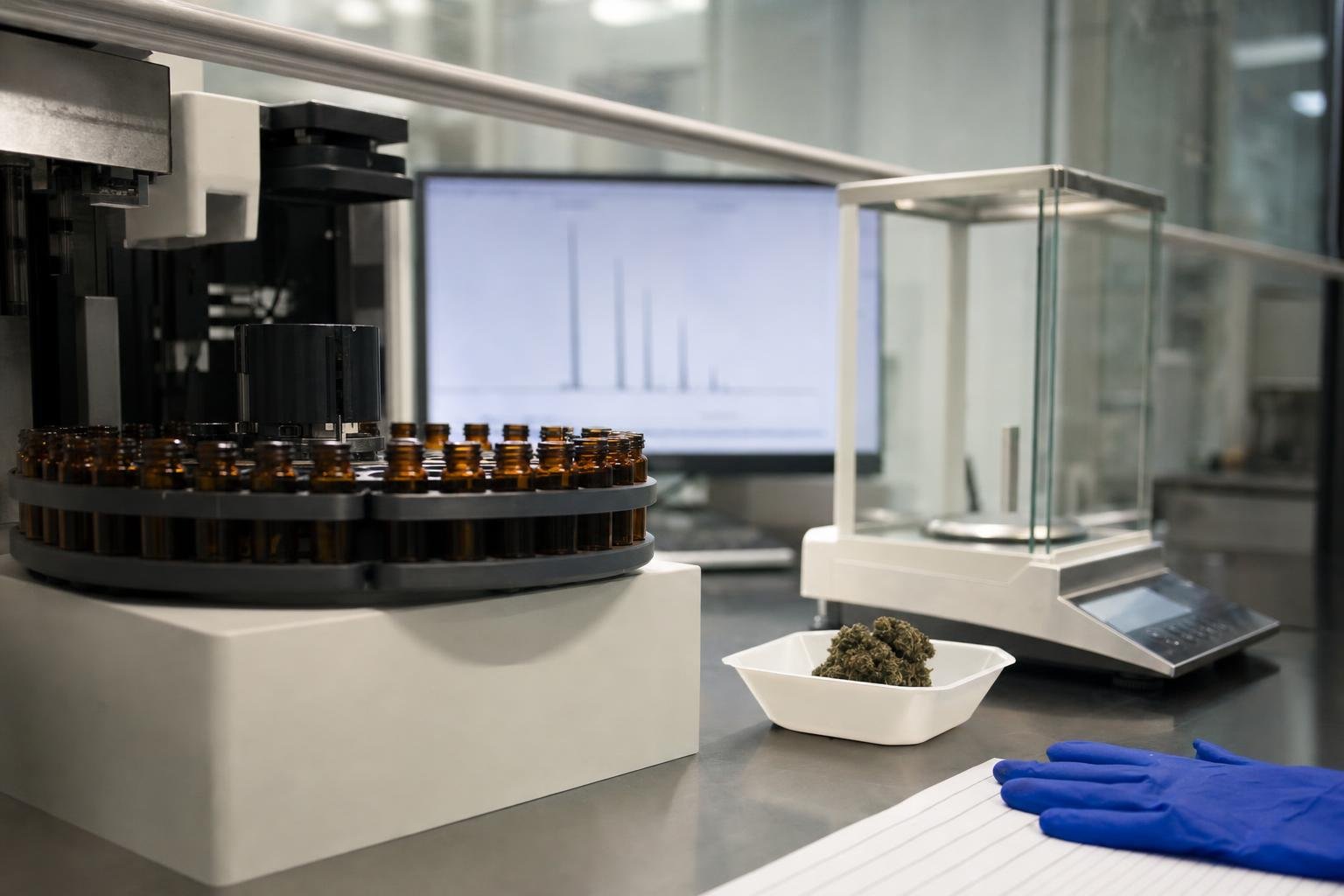
Sampling is the step where most compliance failures actually originate, and it is the step the industry talks about least. A gas chromatograph cannot fix a sample that was pulled from the top of one jar in a 500-kilogram harvest batch. The instrument will measure exactly what you gave it, with great precision, and the number will be wrong. This article covers how increment counts work, what batch-size rules look like in four states, what a chain of custody must contain, and why the lab-shopping problem is fundamentally a sampling-integrity problem.
Whether you are a bench technician learning to collect your first compliance sample, a lab director writing a sampling SOP, or a cultivator trying to understand why the lab pulls the units it pulls, this article gives you the regulatory specifics and the practical reasoning behind them. You do not need to have a chemistry degree, but you do need to care about whether the number on the certificate of analysis means anything.
Here is what this article covers:
- What a sample increment is and why increment count is set by batch size
- How California, New York, Michigan, and Minnesota write their batch-size and increment rules
- What a chain-of-custody form must contain and why Metrc is not a substitute for it
- How lab shopping undermines sampling integrity and what the regulatory response looks like
- How to spot a sampling SOP that will fail an audit
Step 1: Understand What an Increment Is and Why It Is Not Optional
An increment (a single, discrete unit pulled from a batch to contribute to the composite representative sample) is the building block of every cannabis sampling protocol. The logic is borrowed from food and pharmaceutical sampling theory: no single unit from a large batch can represent the whole batch, so you pull multiple units at defined intervals or from defined locations, combine them, and analyze the composite.
For flower and bulk plant material, an increment is typically a sub-sample pulled from a specific location in a container, such as the upper, middle, or lower section. Minnesota’s Cannabis Technical Authority makes this spatial requirement explicit, directing samplers to pull increments at random from the upper, middle, and lower sections of each container. That rule exists because cannabinoid distribution in a bulk container is not uniform: fines settle, moisture migrates, and dense material sinks.
For packaged products and pre-rolls, the definition is simpler. Both California §15708 and New York’s Sampling Quality System Standard define each increment for a cannabis product or pre-roll batch as one packaged unit. You are not opening units and scooping from them. You are pulling sealed, finished packages at random from the batch.
The number of increments you pull is not a judgment call: it is set by the batch-size table in your state’s regulations, and pulling fewer is a sampling nonconformance that can invalidate the certificate of analysis.
Minnesota adds one more requirement worth noting: the minimum increment count must account for both the laboratory-analysis sample and the retain sample. If your state requires a retain, plan your increment count accordingly before you leave the facility.
Step 2: Read Your State’s Batch-Size Table Before You Write Your SOP
Every state with a licensed cannabis-testing program publishes a batch-size table that maps the number of units in a batch to the minimum number of increments required. These tables are not interchangeable. Here is what four states actually require.
California codifies its product and pre-roll sampling rules in §15708 of the DCC regulations. The minimum increment counts are: 2 units for batches of 50 or fewer, 3 for 51 to 150, 5 for 151 to 500, 8 for 501 to 1,200, 13 for 1,201 to 3,200, and 20 for 3,201 to 10,000 units. For harvest batches, §15707 takes a weight-based approach: the representative sample must weigh 0.35 percent of the total harvest-batch weight.
New York requires a random, statistically significant sample from each produced lot, with increment counts set by Table 1 of the Sampling Quality System Standard. The OCM sampling checklist caps a cannabis-product or pre-roll batch at 150,000 units and allows additional increments when they are needed to complete required testing or ensure representativeness.
Minnesota requires the compliance representative sample to meet or exceed the minimum amount required for all compliance testing performed, per the Cannabis Technical Authority. The retain requirement is built into the minimum count, so you cannot use the same increments for both analysis and retain.
Michigan defines an analytical batch as 20 samples, excluding quality-control samples. That definition matters for lab-side processing: it sets the cadence at which QC samples must be inserted, which affects how you schedule runs.
Note: Hemp products tested under a state adult-use or medical program may follow the same batch-size tables as marijuana products, or they may follow separate rules. Check your state’s specific guidance for hemp-derived products before assuming the marijuana table applies.
The single most common SOP gap I see is a lab that copied another state’s batch-size table without checking whether their own state’s table matches. They often do not.
Step 3: Build a Chain of Custody That Will Survive an Audit
A chain of custody (a document that records every transfer of custody of a sample, from collection through final disposal) is not a formality. It is the evidentiary record that connects the certificate of analysis to a specific, identified batch. If that record has a gap, the result is legally undefendable.
California §15705 requires the licensed laboratory to complete a chain-of-custody form for each sample it collects and analyzes. The form must travel with the sample.
Michigan’s sampling and testing guidance specifies the minimum fields: the complete Metrc identification number, product name, product type, number of containers, and the weights of both the source package and the test sample. Weight at collection and weight at receipt are both required because any discrepancy between them is a custody event that must be explained.
Minnesota requires chain-of-custody information to be recorded in Metrc and on the testing facility’s own chain-of-custody form. Metrc alone is not sufficient. The state’s track-and-trace system records transfers, but it does not capture the sample-level detail that a laboratory chain-of-custody form records.
New York requires any changes to the number of collected sample units to be documented on both the chain of custody and the shipping manifest. If you discover in transit that a unit is damaged and you remove it, that removal is a chain-of-custody event.
Every signature, timestamp, and weight entry on a chain-of-custody form is a data point an auditor will check against the laboratory information management system, the Metrc record, and the certificate of analysis.
For a deeper look at how chain-of-custody integrity connects to method validation, see our method validation article.
Step 4: Recognize Lab Shopping as a Sampling-Integrity Problem
Lab shopping is the practice of submitting a batch to more than one licensed laboratory and releasing only the result that passes or shows the most favorable potency. It is worth being precise about what the sourced evidence does and does not show. The state licensing systems described in this article, including California’s licensed-lab list, New Jersey’s licensed-lab page, and Montana’s statutory laboratory list, establish that states track which laboratories are authorized to produce compliance results. They do not, by themselves, quantify how often producers submit to multiple labs.
What the regulatory structure does reveal is the mechanism. A producer who submits the same batch to two laboratories is generating two separate chains of custody for the same material. One of those chains of custody will be suppressed. That suppressed record represents a compliance result that never reached the regulator, and a batch that may have failed pesticide, potency, or microbiological testing that reached the market anyway.
The regulatory response has two main components. First, licensed-lab lists make it possible for regulators to cross-reference which laboratory issued a passing certificate for a given Metrc tag. Second, chain-of-custody and Metrc requirements create a paper trail that, in principle, makes it harder to submit the same tagged batch twice without detection.
The sampling record is the only document that proves the result on the certificate of analysis came from the batch on the shelf, and a compromised sampling record makes every downstream instrument result meaningless.
New Jersey states explicitly that its licensed laboratories are subject to state guidelines for sampling, collection, labeling, preservation, transportation, storage, and testing. That scope language matters: it places sampling conduct inside the laboratory’s license conditions, not just the producer’s.
Note: Lab shopping is distinct from a producer legitimately re-testing a batch after a failed result under a state’s retesting protocol. Most states allow a defined retesting pathway with specific rules about which laboratory may conduct the retest and how the chain of custody must be maintained. Check your state’s retesting rules before advising a client on their options after a failure.
Step 5: Audit Your Sampling SOP Against These Four Failure Points
Most sampling SOPs that fail an ISO/IEC 17025 audit or a regulatory inspection fail on one of four specific points. Check yours against each.
Increment count is not tied to the current state batch-size table. If your SOP says “pull three increments” without referencing the table and the batch-size range, it will fail the moment a batch falls into a different size tier.
The chain-of-custody form does not capture weight at collection and weight at receipt separately. A single weight field is not sufficient. Discrepancies between collection weight and receipt weight are chain-of-custody events and must be documented.
The SOP does not specify how increments are selected from bulk containers. Random selection from the top of a container is not random selection from the batch. Your SOP must specify spatial randomization, such as upper, middle, and lower sections, consistent with what Minnesota’s Technical Authority requires.
The retain sample is not accounted for in the minimum increment count. If your state requires a retain, pulling the minimum increments and then splitting them to create a retain means your analysis sample is under-mass. Plan the total increment count to cover both.
A sampling SOP that does not cite the specific regulatory section it is implementing is a SOP that will drift out of compliance the next time the regulation is amended.
For context on what the laboratory does with the sample once it arrives, see our compliance testing overview and the cost-per-sample breakdown.
Quick answers
How many sample increments does California require for a cannabis product batch of 500 units? California requires 5 sample increments for a batch of 151 to 500 packaged units under DCC regulations §15708. Each increment is one packaged unit, so you are pulling 5 units from that batch. The full batch-size table is in the DCC text of regulations at cannabis.ca.gov.
What has to be on a cannabis chain-of-custody form? Requirements vary by state, but Michigan’s guidance specifies the complete Metrc identification number, product name, product type, number of containers, and the weights of both the source package and the test sample. Minnesota requires the same chain-of-custody information to be recorded in Metrc and on the testing facility’s own form. Check your state’s primary guidance document because these fields are the minimum, not a ceiling.
What is the maximum batch size for cannabis products in New York? New York caps a cannabis-product or pre-roll batch at 150,000 units, per the OCM sampling checklist. The number of increments you must pull from that batch is set by Table 1 of New York’s Sampling Quality System Standard. Additional increments are allowed when they are needed to complete required testing or ensure representativeness.
What is lab shopping in cannabis testing and why does it matter? Lab shopping refers to the practice of submitting a batch to multiple licensed laboratories and releasing only the result that passes or shows the highest potency. It matters because a compliant sample result is only meaningful if the sample was collected and submitted through a single, documented chain of custody. States address this partly through mandatory chain-of-custody forms, Metrc tracking, and official licensed-lab lists, but no single federal rule prohibits the practice outright.
Does my cannabis testing lab need ISO 17025 accreditation? In California, yes: the Department of Cannabis Control requires testing laboratories to obtain and maintain ISO/IEC 17025 accreditation. Most licensed cannabis-testing states have moved toward the same requirement, but the specific rule lives in each state’s testing-laboratory regulations. See our ISO 17025 audit preparation guide at /blog/cannabis-testing-lab-certification-how-to-prepare-for-iso-17025-audits/ for what the accreditation process actually involves.
Can a grower collect their own compliance sample and send it to the lab? In most licensed states, no. California, New York, and Minnesota all place sampling responsibility on the licensed testing laboratory or a licensed sampling firm, not the producer. Allowing the producer to collect their own sample breaks the chain of custody and creates an obvious incentive to cherry-pick material, which is exactly what the increment-and-randomization rules are designed to prevent.
Sources
- California DCC Text of Regulations (§15705, §15707, §15708)
- California DCC Testing Laboratory License Types
- California DCC Licensed Testing Laboratories
- New York OCM Sampling Quality System Standard
- New York OCM Sampling Checklist v3
- New York OCM Sampling Firm and Lab Testing Q&A
- Michigan CRA Sampling and Testing Technical Guidance
- Minnesota OCM Cannabis Technical Authority v2.0
- Montana Department of Revenue Licensed Testing Laboratories List
- New Jersey Cannabis Regulatory Commission Testing Laboratories
FAQ
Frequently asked
- How many sample increments does California require for a cannabis product batch of 500 units?
- California requires 5 sample increments for a batch of 151 to 500 packaged units under DCC regulations §15708. Each increment is one packaged unit, so you are pulling 5 units from that batch. The full batch-size table is in the DCC text of regulations at cannabis.ca.gov.
- What has to be on a cannabis chain-of-custody form?
- Requirements vary by state, but Michigan's guidance specifies the complete Metrc identification number, product name, product type, number of containers, and the weights of both the source package and the test sample. Minnesota requires the same chain-of-custody information to be recorded in Metrc and on the testing facility's own form. Check your state's primary guidance document because these fields are the minimum, not a ceiling.
- What is the maximum batch size for cannabis products in New York?
- New York caps a cannabis-product or pre-roll batch at 150,000 units, per the OCM sampling checklist. The number of increments you must pull from that batch is set by Table 1 of New York's Sampling Quality System Standard. Additional increments are allowed when they are needed to complete required testing or ensure representativeness.
- What is lab shopping in cannabis testing and why does it matter?
- Lab shopping refers to the practice of submitting a batch to multiple licensed laboratories and releasing only the result that passes or shows the highest potency. It matters because a compliant sample result is only meaningful if the sample was collected and submitted through a single, documented chain of custody. States address this partly through mandatory chain-of-custody forms, Metrc tracking, and official licensed-lab lists, but no single federal rule prohibits the practice outright.
- Does my cannabis testing lab need ISO 17025 accreditation?
- In California, yes: the Department of Cannabis Control requires testing laboratories to obtain and maintain ISO/IEC 17025 accreditation. Most licensed cannabis-testing states have moved toward the same requirement, but the specific rule lives in each state's testing-laboratory regulations. See our ISO 17025 audit preparation guide at /blog/cannabis-testing-lab-certification-how-to-prepare-for-iso-17025-audits/ for what the accreditation process actually involves.
- Can a grower collect their own compliance sample and send it to the lab?
- In most licensed states, no. California, New York, and Minnesota all place sampling responsibility on the licensed testing laboratory or a licensed sampling firm, not the producer. Allowing the producer to collect their own sample breaks the chain of custody and creates an obvious incentive to cherry-pick material, which is exactly what the increment-and-randomization rules are designed to prevent.
Related guides
All guides- 01
Cannabis Lab 101: Cannabis Testing Instruments — HPLC, GC-MS, ICP-MS, and What Each One Is For
I spent four-plus years running compliance assays on a bench, and the question I heard most from new techs was simple: which box does which test? This walkthrough covers every major instrument class in a cannabis testing lab — what it detects, why it was chosen for that assay, and the one mistake buyers keep making.
- 02
Cannabis Lab 101: The Cannabis Testing Market in 2026 — Who Tests What, and What It Costs
I spent four years on the bench watching growers squint at invoices and ask why a flower panel costs $600. This article breaks down who is licensed to test cannabis, what analytes every compliance panel must cover, what real labs charge per test, and why a single national market-size number is harder to find than it looks.
Need this tested?
Compare labs that run these assays and get quotes in one go — no account, no fee.