· 10 min read
Cannabis Lab 101: What Happens When a Cannabis Batch Fails Testing (Remediation, Retest, and Destruction Rules)
I spent years reporting failing results to clients and watching the same confused calls follow every time. This article walks cultivators, manufacturers, and QA managers through the three legal outcomes after a cannabis batch fails: remediation, retesting, and mandatory destruction, with the actual rules from California and Oklahoma.
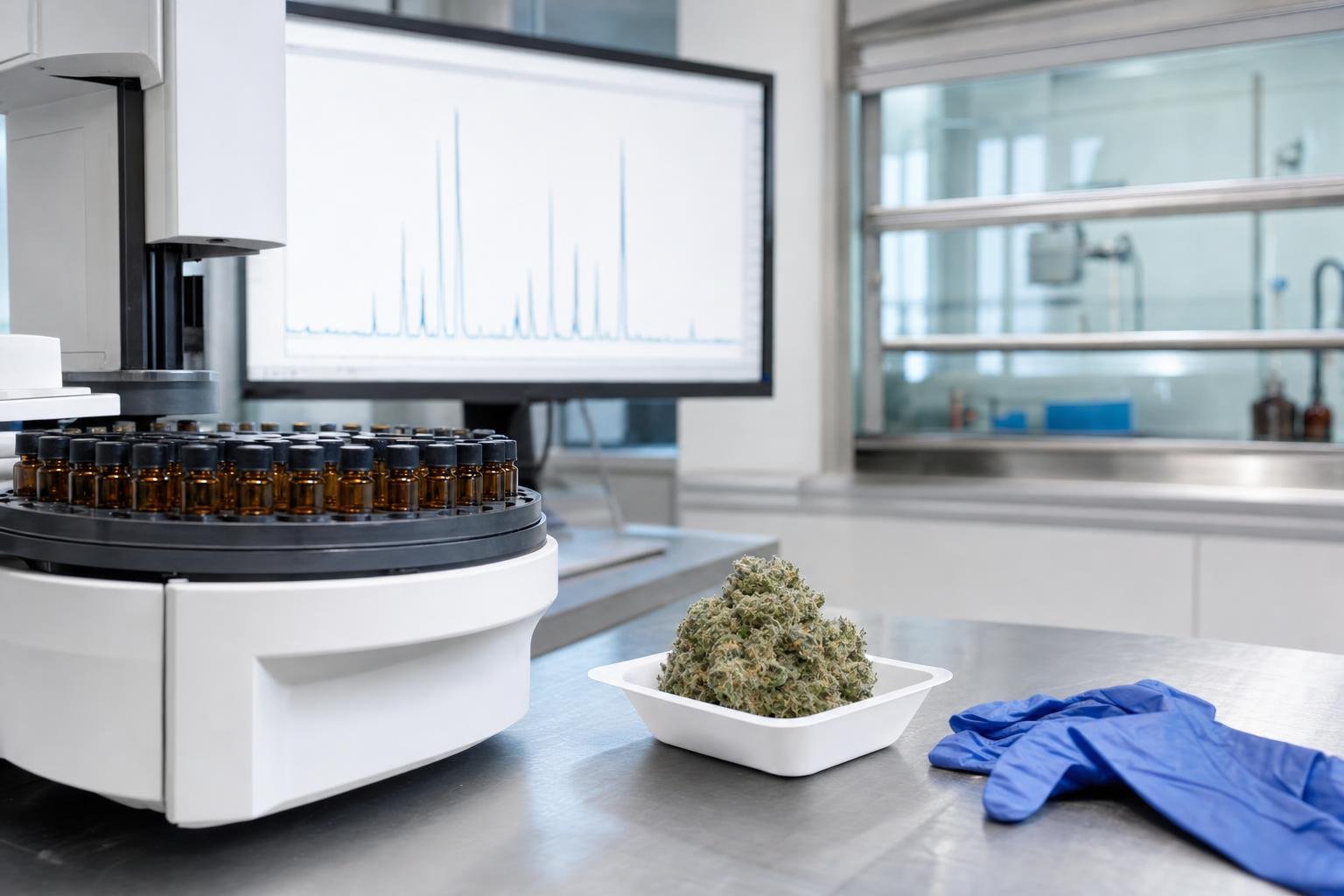
A failing test result lands in your inbox and the clock starts immediately. Whether you are a cultivator watching a harvest batch sit in quarantine, a manufacturer deciding whether to attempt remediation, or a QA manager writing the corrective action plan, the next move is not obvious and the wrong one can cost you the batch, the license, or both. This article walks through the three legal outcomes after a cannabis compliance failure: remediation, retesting, and mandatory destruction, using the actual regulatory text from California and Oklahoma.
Whether you are a grower trying to understand why your flower is stuck in a distributor’s vault, a manufacturer weighing the cost of reprocessing against the cost of destruction, or a lab director explaining to a client why you cannot simply run the sample again until it passes, this article is for you. It is not for consumers, investors, or anyone looking for dispensary recommendations.
Here is what this article covers:
- The three possible outcomes after a compliance failure and what determines which path is available
- California’s remediation rules: who can remediate, how many attempts are allowed, and what documentation is required
- Oklahoma’s retesting and remediation framework, including the microbiological pathway
- Why “retest” does not mean what most clients think it means
- Destruction timelines and what triggers mandatory disposal
- Analyte-class differences: why edibles, microbials, and potency failures are not treated the same
Step 1: Understand the three pathways before you do anything else
When a compliance test comes back failing, there are three possible outcomes: remediation, retesting, or destruction. These are not interchangeable options you can choose freely. The permitted path depends on the analyte that failed, the product type, and the specific state’s regulations. The single most expensive mistake I see after a failure is a licensee assuming that any of these three options is available to them without checking the rule first.
Remediation means additional processing intended to remove or reduce a contaminant to a compliant level. It is a manufacturing step, not a paperwork step. California’s DCC describes it as a process intended to remove contaminants from a product, and the state is explicit that manufacturers are the primary entities authorized to perform it.
Retesting in the regulatory sense is narrower than most clients expect. It is not a general right to keep submitting samples until one passes. As I will cover in Step 3, California and Oklahoma define retesting very differently, and neither definition gives a licensee an open-ended second chance.
Destruction is the default outcome when neither remediation nor retesting is available or when both have been exhausted. It is not a failure of the system. It is the system working as designed.
Before you call the lab asking for a rerun, identify which analyte failed, confirm the product type, and pull the current regulation for your state. For pesticide testing background, see our detailed guide on cannabis pesticide testing. For a broader look at what compliance testing covers, see our introduction to cannabis compliance testing.
Step 2: Navigate California’s remediation rules
California’s framework is among the more detailed in the country, and it has real teeth. Under the California DCC regulations, a finished cannabis product batch that fails any regulatory compliance laboratory testing requirement must be destroyed unless it can be remediated by relabeling or under a Department-approved corrective action plan.
California DCC rules generally provide that a failed batch is remediated by an approved licensed manufacturer or manufacturing-authorized microbusiness. A distributor may remediate a cannabis product batch by relabeling it when the failure concerns cannabinoid or terpenoid content and the applicable THC limits are met. Where the applicable rule requires it, the manufacturer must submit the corrective action plan for Department approval before remediation begins.
California limits a batch to two remediation attempts. If the batch fails testing after the second remediation and the associated retest, the entire batch must be destroyed. There is no third attempt.
Edible cannabis products get special treatment. California’s regulations generally prohibit remediation of edibles that fail compliance testing, with limited stated exceptions. If you are manufacturing infused products, assume destruction is the outcome for a failed batch unless you can identify a specific regulatory exception that applies to your situation.
Note: Relabeling is listed as a separate permitted pathway in California alongside Department-approved remediation. A potency result that puts a product outside its labeled range may be addressable by relabeling rather than reprocessing, but this is a narrow pathway and the relabeled product still must comply with all applicable requirements. Verify the specific subsection of the DCC regulations before relying on this option.
For the distributor holding a batch that cannot be remediated: the DCC regulations require destruction within 60 days of the failure, or within 30 days of receiving Department notification that the batch may not be remediated, whichever applies. That clock runs whether or not the manufacturer has made a decision.
Step 3: Understand what “retest” actually means in California versus Oklahoma
This is where I see the most confusion, and it costs people real money.
In California, a laboratory retest of an out-of-specification result is not a routine option. California Business and Professions Code section 26100 permits a retest only when the laboratory notifies the Department in writing that the original test was compromised by equipment malfunction, staff error, or another permitted circumstance, and the Department authorizes the retest. This is a compromised-test provision, not a general appeal mechanism. A result you dislike is not a compromised test.
Oklahoma’s retesting framework is structurally different. Under the OMMA permanent rules, the reserve sample is used first for retesting. Only if there is insufficient reserve sample for the required additional tests may a new sample be collected, and that new sample must be representative of the batch and gathered under the rules. If the first retest fails for the same analyte that failed the initial test, the batch must either be remediated or decontaminated, or disposed of under the waste-management law. If the second retest passes for the same analyte, the batch may be processed, sold, or otherwise transferred.
This is a meaningful distinction. Oklahoma is giving the batch a structured second chance through a defined sampling sequence. California is not. If you are operating in California and you want to challenge a result, the conversation starts with whether the test was compromised, not with whether you think the number is wrong.
Note: The distinction between a laboratory retest of a compromised sample and a structured reserve-sample or new-sample retest is not just procedural. A new sample draw can catch sampling heterogeneity that a rerun of the original extract cannot. For more on how sampling affects results, see our technical overview of potency determination.
For Colorado: the fact sheet for this article did not return verified Colorado regulation text establishing the current rules for retesting after a failure. Check the current Colorado Marijuana Enforcement Division rules directly before making any decision based on Colorado-specific expectations.
Step 4: Follow Oklahoma’s microbiological remediation pathway correctly
Oklahoma has a specific and well-defined pathway for harvest batches that fail microbiological contaminant testing, and it is worth understanding in detail because it illustrates how analyte class shapes the available options.
Under the OMMA rules, a grower may transfer a harvest batch that failed microbiological testing to a processor, but only for remediation. The processor must either remediate the harvest batch into a solvent-based concentrate or dispose of it. There is no option to sell the flower as-is or to simply retest it as flower and hope for a better number.
The production batch resulting from that microbiological remediation must then be tested under the applicable testing rule before it can be released. A passing solvent-extraction step does not substitute for compliance testing of the finished concentrate.
This pathway makes chemical sense. Solvent extraction can reduce or eliminate certain microbial loads that would make raw flower non-compliant. But it does not automatically make the resulting concentrate compliant across all required analytes. Residual solvents, pesticides, and potency all still need to be verified in the finished product.
Oklahoma’s recall guidance reinforces this: a remediated batch must be fully retested and pass all required analytes before release. Not just the analyte that originally failed. All of them.
Note: The July 11, 2026 OMMA document is a permanent-rule version, but OMMA identifies the August 28, 2026 emergency rules as the current rules, amending and superseding the July 11 permanent rules. A public-comment period for proposed permanent rules opened November 2, 2026. Cite the most current OMMA rules page when documenting your corrective action and verify which version is controlling at the time you are writing.
Step 5: Build the documentation trail before you need it
Every remediation attempt, retest authorization, and destruction event needs a paper trail that will survive a regulatory inspection. I suggest labs and licensees take this a step further than the minimum: document the decision logic, not just the outcome.
For California, the documentation sequence for a remediation attempt looks like this: the failing result from the licensed testing laboratory, the corrective action plan submitted to the DCC for approval where required, the Department’s written authorization, the remediation processing records, and then the full post-remediation compliance test results. A remediated batch cannot be released in California on the strength of the remediation step alone: it must pass all required post-remediation analyses before it moves.
For Oklahoma, the documentation sequence for a retest includes the original failing result, the record of the reserve sample used (or, if the reserve was insufficient, the new representative sample draw with sampling personnel, date, batch identifier, and sample weight), the chain of custody to the testing laboratory, and the retest result. If the batch then goes to remediation, add the transfer records to the processor and the full post-remediation test package.
For destruction, both states require records of the destruction event. California’s DCC regulations set the destruction timeline: 60 days from failure or 30 days from Department notification that remediation is not permitted, whichever applies. Do not wait until day 59 to schedule the destruction witness.
For context on what a full compliance test package covers and what it costs, see our article on the cost of testing cannabis.
Quick answers
Can a cannabis batch be retested after a failed result? It depends on the state and the reason for the failure. In California, a laboratory may retest an out-of-specification sample only when the lab notifies the Department in writing that the original test was compromised by equipment malfunction, staff error, or another permitted circumstance, and the Department authorizes the retest under California Business and Professions Code section 26100. Oklahoma takes a different approach: under the current OMMA rules, the reserve sample is used first for retesting, and a new representative sample may be collected only when the reserve is insufficient; if the second retest passes for the same analyte, the batch may be released.
What analytes can be remediated after a cannabis batch fails testing? There is no single national rule. The permitted remediation pathway depends on the analyte class, the product type, and the state. California generally prohibits remediation of edible cannabis products that fail compliance testing, with limited exceptions, while Oklahoma specifically allows a harvest batch that failed microbiological testing to be transferred to a processor for remediation into a solvent-based concentrate. Pesticide failures, microbial failures, and potency failures are not treated identically in any jurisdiction reviewed here.
How many times can a cannabis batch be remediated in California? California DCC regulations limit a batch to two remediation attempts. If the batch fails testing after the second remediation and the associated retest, the entire batch must be destroyed.
Who is allowed to remediate a failed cannabis batch in California? California DCC rules generally provide that a failed batch is remediated by an approved licensed manufacturer or manufacturing-authorized microbusiness. A distributor may remediate a cannabis product batch by relabeling it when the failure concerns cannabinoid or terpenoid content and the applicable THC limits are met. Where the applicable rule requires it, the manufacturer must also submit a corrective action plan and receive DCC approval before proceeding.
How long does a California distributor have to destroy a batch that cannot be remediated? A California distributor must destroy a batch that failed compliance testing and cannot be remediated within 60 days of the failure, or within 30 days of receiving Department notification that the batch may not be remediated, whichever applies to the circumstances, under the DCC regulations.
Does a passing retest automatically release a cannabis batch? No. Both California and Oklahoma require a remediated or additionally processed batch to pass all analyses required under the applicable regulations, not just the analyte that originally failed. Completing the remediation step or obtaining one passing result on the failing analyte does not by itself authorize release.
Sources
- California DCC: Testing Laboratories Guidance
- California DCC: Text of Regulations
- California Business and Professions Code section 26100
- Oklahoma OMMA Permanent Rules, July 11, 2026
- Oklahoma OMMA Rules page
- Oklahoma OSDH Chapter 681 Medical Marijuana Regulations
- Oklahoma OMMA Rules, November 1, 2022
- Oklahoma OMMA: Licensee Recall Responsibilities
FAQ
Frequently asked
- Can a cannabis batch be retested after a failed result?
- It depends on the state and the reason for the failure. In California, a laboratory may retest an out-of-specification sample only when the lab notifies the Department in writing that the original test was compromised by equipment malfunction, staff error, or another permitted circumstance, and the Department authorizes the retest under California Business and Professions Code section 26100. Oklahoma takes a different approach: under the current OMMA rules, the reserve sample is used first for retesting, and a new representative sample may be collected only when the reserve is insufficient; if the second retest passes for the same analyte, the batch may be released.
- What analytes can be remediated after a cannabis batch fails testing?
- There is no single national rule. The permitted remediation pathway depends on the analyte class, the product type, and the state. California generally prohibits remediation of edible cannabis products that fail compliance testing, with limited exceptions, while Oklahoma specifically allows a harvest batch that failed microbiological testing to be transferred to a processor for remediation into a solvent-based concentrate. Pesticide failures, microbial failures, and potency failures are not treated identically in any jurisdiction reviewed here.
- How many times can a cannabis batch be remediated in California?
- California DCC regulations limit a batch to two remediation attempts. If the batch fails testing after the second remediation and the associated retest, the entire batch must be destroyed.
- Who is allowed to remediate a failed cannabis batch in California?
- California DCC rules generally provide that a failed batch is remediated by an approved licensed manufacturer or manufacturing-authorized microbusiness. A distributor may remediate a cannabis product batch by relabeling it when the failure concerns cannabinoid or terpenoid content and the applicable THC limits are met. Where the applicable rule requires it, the manufacturer must also submit a corrective action plan and receive DCC approval before proceeding.
- How long does a California distributor have to destroy a batch that cannot be remediated?
- A California distributor must destroy a batch that failed compliance testing and cannot be remediated within 60 days of the failure, or within 30 days of receiving Department notification that the batch may not be remediated, whichever applies to the circumstances, under the DCC regulations.
- Does a passing retest automatically release a cannabis batch?
- No. Both California and Oklahoma require a remediated or additionally processed batch to pass all analyses required under the applicable regulations, not just the analyte that originally failed. Completing the remediation step or obtaining one passing result on the failing analyte does not by itself authorize release.
Related guides
All guides- 01
Cannabis Lab 101: Chain of Custody for Cannabis Samples (Field-by-Field Requirements and Common Rejection Triggers)
I break down every field that must appear on a cannabis chain-of-custody form, explain why each one exists, and list the exact conditions that cause a lab to reject a sample before a single instrument is turned on. Covers California, New York, Nevada, and Maine requirements with primary-source citations.
- 02
Cannabis Lab 101: Sampling and Why the Sample Matters More Than the Instrument
I've watched a perfectly calibrated instrument return a useless result because the sample going into it was wrong. This article covers increment counts, batch-size rules in California, New York, Michigan, and Minnesota, chain-of-custody requirements, and the lab-shopping problem that undermines all of it.
- 03
Cannabis Lab 101: Cannabis Testing Instruments — HPLC, GC-MS, ICP-MS, and What Each One Is For
I spent four-plus years running compliance assays on a bench, and the question I heard most from new techs was simple: which box does which test? This walkthrough covers every major instrument class in a cannabis testing lab — what it detects, why it was chosen for that assay, and the one mistake buyers keep making.
Need this tested?
Compare labs that run these assays and get quotes in one go — no account, no fee.