· 11 min read
Cannabis Lab 101: How to Become a Weed Tester — What the Job Actually Is
I spent four years on the bench in licensed cannabis testing labs, and the number-one question I get is whether 'weed tester' is a real job. It is — but nobody is paying you to smoke. Here is what the actual roles look like, what instruments you will run, and how to get hired.
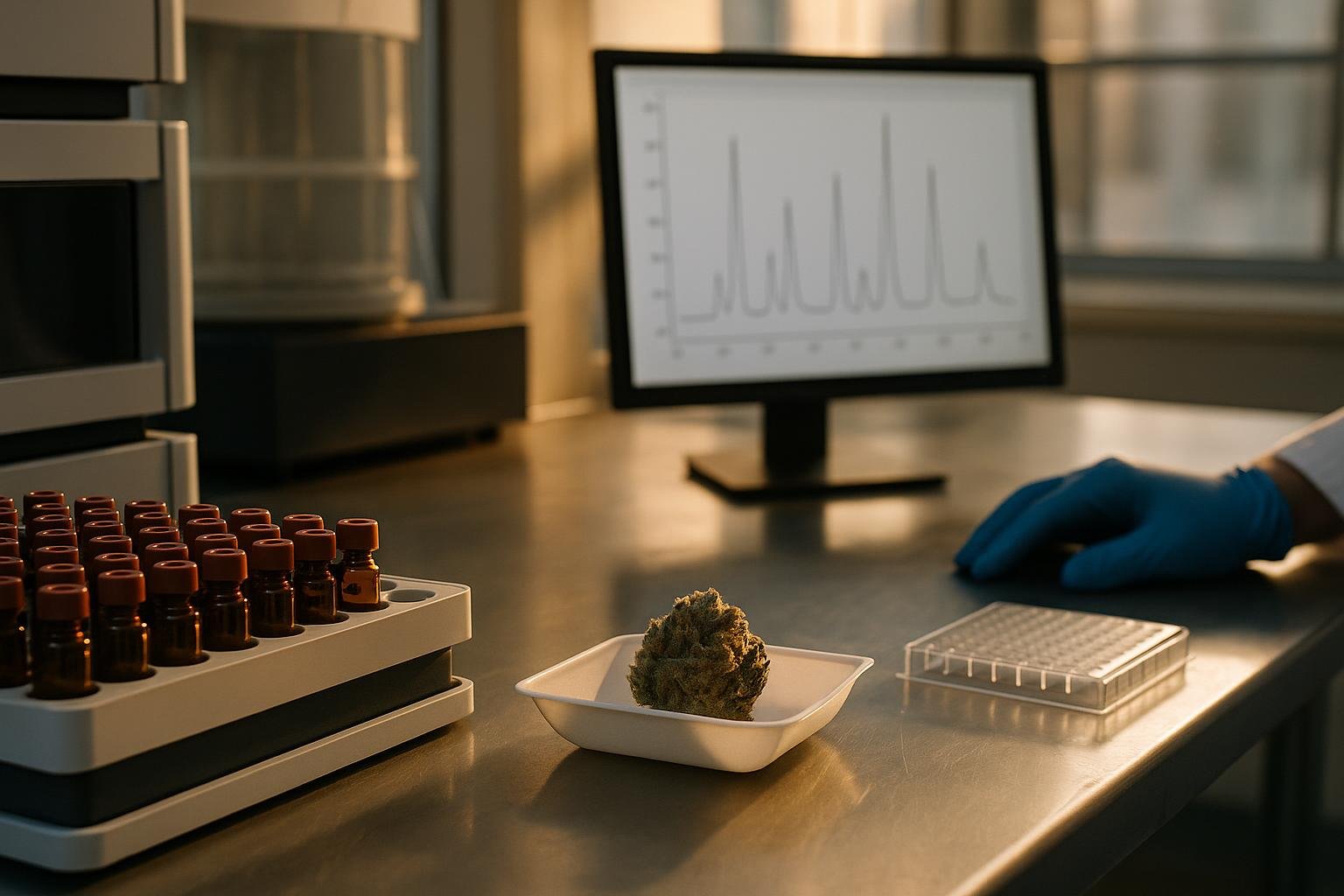
Nobody is paying you to sit in a beanbag chair and smoke flower all day. I know that is what the internet implies when you search ‘weed tester job,’ and I understand the appeal of the fantasy — but after four-plus years running assays in licensed cannabis testing labs, I can tell you the reality is HPLC columns, calibration curves, and sample-prep protocols, not a couch and a lighter. The actual job is analytical chemistry, and it is genuinely interesting work once you understand what you are doing and why.
Whether you are a recent chemistry grad wondering if cannabis labs are worth your time, a working lab tech thinking about switching sectors, or a grower trying to understand who is actually handling your sample — this article maps the real roles, the real instruments, and the real entry routes. You will not find salary figures here that I cannot source, but you will leave knowing exactly what function each role performs and what training it requires.
Here is what we are covering:
- The myth versus the reality of “weed testing” as a profession
- The three functional roles that actually exist in a cannabis testing lab
- The instruments and methods those roles use every day
- The analyte panels those methods cover
- How to get in the door with or without a four-year degree
- A note on sensory QA roles at producers (different from a testing lab)
Step 1: Understand what “weed testing” actually means
The phrase “weed tester” does not appear in any AOAC or ASTM standard. What those documents describe — and what licensed cannabis testing labs are actually accredited to perform — is instrumental chemical analysis. AOAC Official Method 2018.10 determines ten specific cannabinoids (THCA, Δ9-THC, CBDA, CBD, CBGA, CBG, THCV, CBC, CBN, and CBDVA) in dried flowers and oils using liquid chromatography with UV detection. AOAC Official Method 2018.11 extends that to concentrates and oils using liquid chromatography with diode-array detection and optional mass spectrometric detection. ASTM D8442-22 covers cannabinoid analysis by gas chromatography with flame ionization detection (GC-FID). None of these methods include a step that says “analyst shall inhale sample.”
The defining feature of every regulated cannabis testing method is that a machine measures the chemistry, not a human nose or palate. The methods assume you can operate a chromatograph, prepare a calibration curve, and evaluate system suitability — not that you have a refined palate for terpene profiles. If you are drawn to cannabis because you enjoy it recreationally, that is fine, but it is essentially irrelevant to whether you will be good at this job. What matters is whether you can keep an HPLC column happy and your blanks clean.
Note: There is a separate category of sensory or quality-assurance panel work that exists at cannabis producers and some dispensary groups — think trained tasters evaluating consistency across production batches. That work is real, but it is not a testing lab role, it is not regulated by AOAC or ASTM methods, and it is not what most people are imagining when they search this topic. We will touch on it briefly in Step 4.
Step 2: Map the three real functional roles in a testing lab
Licensed cannabis testing labs organize their work around three broad functions. The job titles vary by lab and state, but the functions are consistent because the methods that define the work are consistent.
Function one: Sample intake and preparation. Someone has to receive the sample from the client, log it into the laboratory information management system (LIMS — the software that tracks samples, results, and chain of custody), verify that it matches the manifest, weigh it, homogenize it, and prepare it for analysis. ASTM D8493-23, the Standard Guide for Sample Preparation of Cannabis and Hemp Inflorescence for Laboratory Analysis, defines the standardized approach to this work. This is often the entry-level role in a cannabis lab. It requires attention to detail, comfort with gravimetric technique (weighing by mass), and the ability to follow SOPs precisely. It does not require a four-year degree at every lab, though a chemistry background accelerates your competence.
Function two: Instrumental analysis. This is the core of what a cannabis testing lab does. An analyst — sometimes called a chemist, sometimes a lab technician depending on the org chart — runs the prepared extracts on HPLC, GC-FID, ICP-MS (inductively coupled plasma mass spectrometry, used for heavy metals analysis), or other platforms. They evaluate calibration, flag out-of-specification results, and release data to the LIMS. AOAC Official Methods 2018.10 and 2018.11 are the benchmark potency methods; AOAC Official Method 2025.14 covers aflatoxins and ochratoxin A using immunoaffinity column cleanup followed by HPLC. This role typically requires at minimum an associate degree in chemistry or a closely related field, and most labs hiring for it prefer a bachelor’s.
Function three: Quality assurance and method oversight. Someone has to write the SOPs, manage the proficiency testing program, oversee method validation, and interface with the accreditation body. This is typically a lab director or QA manager role. It requires deep familiarity with ISO/IEC 17025 and with the performance requirements set by documents like AOAC SMPR 2017.001 and 2017.002 — the Standard Method Performance Requirements (defined minimum accuracy, precision, and range criteria a method must meet) for cannabinoid quantitation in concentrates and dried plant materials.
Step 3: Know the analyte panels — because the breadth of the work is the job
One reason cannabis lab work is more demanding than people expect is the sheer scope of what a full compliance panel covers. According to AOAC’s cannabis analyte listings, a comprehensive cannabis testing program may quantify up to 18 cannabinoids, up to 33 terpenes, moisture, water activity, up to 12 heavy metals, up to 104 pesticides, and up to 5 mycotoxins. Each analyte class is a different method, often a different instrument, and in many cases a different sample-preparation workflow.
That means a working cannabis lab analyst is not a specialist in one technique — they are expected to be competent across multiple platforms and matrix types. Potency work runs on HPLC-UV or HPLC-DAD per AOAC 2018.10 and 2018.11. Pesticide residue screening draws on multiresidue methods such as AOAC Official Method 2007.01, which uses QuEChERS extraction (a rapid sample-preparation technique: Quick, Easy, Cheap, Effective, Rugged, Safe) followed by LC-MS/MS or GC-MS/MS. Mycotoxin panels like aflatoxins use immunoaffinity cleanup before HPLC per AOAC Official Method 2025.14. AOAC SMPR 2023.001 sets performance requirements specifically for pesticide determination in cannabis-containing beverages, which tells you that even the matrix diversity — flower, concentrate, edible, beverage — creates separate method-validation obligations.
Note: Hemp and marijuana share many of the same analyte panels, but the regulatory thresholds differ significantly. Under 7 U.S.C. §1639o, hemp is defined by a threshold of not more than 0.3% delta-9 THC on a dry weight basis, while state marijuana programs set their own action limits for contaminants. Always check your state’s specific panel requirements against the primary regulator source — they are not uniform.
For a deeper look at what potency testing involves technically, see the technical overview of potency determination and the cannabinoid separation methods guide. For contaminant context, the pesticide testing guide, heavy metals article, and mycotoxins overview are worth reading before your first interview.
Step 4: Understand the sensory QA role — and why it is not what you think
I want to be honest about this one because the fantasy of getting paid to evaluate cannabis by consuming it is not entirely fiction — it is just rare, informal, and almost never what a testing lab does.
Some cannabis producers and multi-state operators run internal quality-assurance panels where trained staff evaluate product consistency, aroma, appearance, and texture across production batches. Think of it as the cannabis equivalent of a trained sensory panel at a food manufacturer. The goal is batch-to-batch consistency, not regulatory compliance. This work exists at the producer level, not at the independent testing lab, and it is not governed by any AOAC or ASTM standard method I am aware of — the AOAC and ASTM cannabis methods exclusively describe instrumental chemical analysis.
If this is the role you are actually looking for, you are looking at a job at a licensed cannabis producer or processor, not a third-party testing lab. The skill set is closer to a trained food sensory panelist than to an analytical chemist. I would not count on it as a stable career path in the near term given how young the formal sensory-QA discipline is in cannabis, but it is a real function at some organizations. Search for it under QA technician or product quality roles at producers, not under “cannabis lab” roles.
Note: Do not confuse sensory QA at a producer with terpene testing at a lab. Terpene quantitation is instrumental work — GC-FID or GC-MS — and is part of the analytical chemist’s job, not a tasting exercise. See the terpene testing overview for how that works.
Step 5: Map your entry route based on where you are starting from
The fastest path into a cannabis testing lab is not a cannabis-specific credential — it is demonstrable competency in analytical chemistry fundamentals.
Here is how to think about entry routes depending on your current background:
If you have a bachelor’s degree in chemistry, biochemistry, or biology: You are qualified to apply for an analyst role at most labs right now. Your gap is likely cannabis-specific method knowledge, which you can close by reading the primary AOAC and ASTM methods listed in this article and by familiarizing yourself with your target state’s required testing panel. AOAC Official Methods 2018.10 and 2018.11 are described in AOAC’s publications; read the scope and procedure sections before your interview.
If you have an associate degree or vocational lab training: Target sample-prep and intake roles first. ASTM D8493-23 is the standard that governs the work you will be doing — understanding it signals to a hiring manager that you are serious. Demonstrate gravimetric precision, pipetting accuracy, and SOP discipline. Many working cannabis lab analysts I know started at the intake bench and moved into instrumental roles over time as they built competency across platforms.
If you have no formal lab training: You need to build it before applying. Community college analytical chemistry programs, AOAC training resources, and instrument vendor webinars are all legitimate starting points. Applying for a cannabis lab job without any lab background is unlikely to succeed at a licensed, ISO/IEC 17025-accredited facility — accreditation requires that personnel competency be documented, and “I enjoy cannabis” is not a competency record.
For a more detailed breakdown of the career ladder inside a cannabis lab, see the how to become a cannabis lab technician article. The compliance testing overview is also useful context before your first interview. If you are ready to look at open positions, the Lab Overflow job board lists current cannabis lab openings.
Note: Some states require lab personnel to hold a state-issued agent or employee license in addition to meeting the lab’s own competency requirements. Requirements differ by state and are set by the state cannabis regulatory authority — look up your state’s licensing agency directly rather than relying on a summary.
Quick answers
Is weed tester a real job? Yes, but not in the way most people imagine. The role is analytical instrument work — HPLC, GC-FID, sample prep — governed by methods like AOAC Official Method 2018.10 and ASTM D8442-22. No standard method involves consuming cannabis as part of the analytical procedure.
How much does a weed tester get paid? No single authoritative federal wage table covers this role by that name, so I will not invent a number. Pay varies by state, lab size, and role level. Check the Lab Overflow job board for current posted ranges in your region.
What degree do you need to work in a cannabis testing lab? AOAC and ASTM cannabis methods assume training in chromatographic operation, calibration, and method validation — typically an associate or bachelor’s degree in chemistry or a related science. Some sample-prep and intake roles have been filled by candidates with strong vocational lab training plus mentorship, but requirements vary by employer and state.
What instruments do cannabis lab analysts use? Potency testing uses HPLC-UV or HPLC-DAD per AOAC 2018.10 and 2018.11, and GC-FID per ASTM D8442-22. Mycotoxin panels use immunoaffinity cleanup followed by HPLC per AOAC 2025.14. Pesticide work draws on multiresidue methods such as AOAC 2007.01. Heavy metals analysis uses ICP-MS.
What does a cannabis lab test for? A full compliance panel may cover up to 18 cannabinoids, 33 terpenes, moisture, water activity, 12 heavy metals, 104 pesticides, and 5 mycotoxins according to AOAC’s cannabis analyte listings. The exact required panel is set by your state’s cannabis regulatory authority and varies significantly.
Sources
- AOAC Official Method 2018.10 — Cannabinoids in Cannabis Dried Flowers and Oils (AOAC Publications)
- AOAC Official Method 2018.11 — Cannabinoids in Cannabis Concentrates and Oils (AOAC Publications)
- ASTM D8442-22 — Standard Test Method for Analysis of Cannabinoids in Cannabis Products by GC-FID (iTeh Standards)
- ASTM D8493-23 — Standard Guide for Sample Preparation of Cannabis and Hemp Inflorescence for Laboratory Analysis (ASTM Store)
- AOAC Official Method 2025.14 — Aflatoxins and Ochratoxin A in Cannabis (AOAC Publications)
- AOAC SMPR 2017.001 — Cannabinoids in Cannabis Concentrates (AOAC)
- AOAC SMPR 2023.001 — Pesticides in Cannabis-Containing Beverages (AOAC)
- AOAC Cannabis Analyte Listings (AOAC Member Shop)
- AOAC Official Method 2007.01 — Pesticide Residues by QuEChERS (AOAC Publications)
- 7 U.S.C. §1639o — Federal Hemp Definition (U.S. House Office of the Law Revision Counsel)
- ISO/IEC 17025 and Cannabis Laboratory Accreditation (PJC Inc.)
- ICP-MS for Heavy Metals in Cannabis — PubMed
- Terpene Quantitation by GC-FID and GC-MS in Cannabis — PMC
- QuEChERS acronym and method overview (quechers.eu)
FAQ
Frequently asked
- how much does a weed tester get paid
- Salary figures for cannabis lab analysts are not published in a single authoritative federal survey, so treat any specific number you see online as an estimate tied to a specific region and year. The role most people are imagining maps closest to an analytical chemist or laboratory technician, and pay varies widely by state, lab size, and whether you hold a degree. Check the Lab Overflow job board at /job-board for current posted ranges.
- is weed tester a real job
- Yes, but not in the way most people imagine it. The job is analytical instrument work — running HPLC, GC-FID, and sample-prep workflows — not consuming cannabis. AOAC Official Methods 2018.10 and 2018.11 define what cannabis potency testing actually looks like, and neither involves human consumption.
- what degree do you need to work in a cannabis testing lab
- AOAC and ASTM cannabis methods assume competency in chromatographic operation, calibration, and method validation, which typically comes from an associate or bachelor's degree in chemistry, biochemistry, or a related science. Some sample-prep and intake roles have been filled by candidates with strong vocational lab training plus on-the-job mentorship, though requirements vary by state and employer.
- what instruments do cannabis lab testers use
- Potency testing uses HPLC with UV or diode-array detection per AOAC Official Methods 2018.10 and 2018.11, and GC with flame ionization detection per ASTM D8442-22. Mycotoxin panels use immunoaffinity column cleanup followed by HPLC per AOAC Official Method 2025.14. Pesticide work draws on multiresidue methods such as AOAC Official Method 2007.01.
- what does a cannabis lab test for
- A typical full compliance panel covers cannabinoid potency (up to 18 cannabinoids), terpenes (up to 33), moisture, water activity, up to 12 heavy metals, up to 104 pesticides, and up to 5 mycotoxins, according to AOAC's cannabis analyte listings. The exact required panel depends on your state's regulations, which differ significantly from one another.
Related guides
All guides- 01
Cannabis Lab 101: Cannabis Edibles Testing Cost — Why Infused Products Cost More to Test
I spent four years running potency assays on everything from flower to fudge, and infused products always took longer and cost more. Here is exactly why — matrix effects, homogeneity requirements, and the extra sample prep no one explains — plus real prices from published lab menus.
- 02
Cannabis Lab 101: Cannabis Lab Technician Salary by State and Role
I pulled every sourced number I could find from ZipRecruiter, Indeed, and Salary.com to build a real salary table by role — from sample-prep tech to lab manager. Here is what the data actually says, what drives the spread, and how to negotiate your next offer.
- 03
Cannabis Lab 101: Cannabis Testing Cost Per Sample — 2026 Price Ranges by Assay
I pulled published price lists from licensed labs in New Jersey, Minnesota, and Oregon, plus Utah's state fee schedule, to show you exactly what each assay costs in 2026 — and why the same test can cost twice as much in one state as another.
Need this tested?
Compare labs that run these assays and get quotes in one go — no account, no fee.